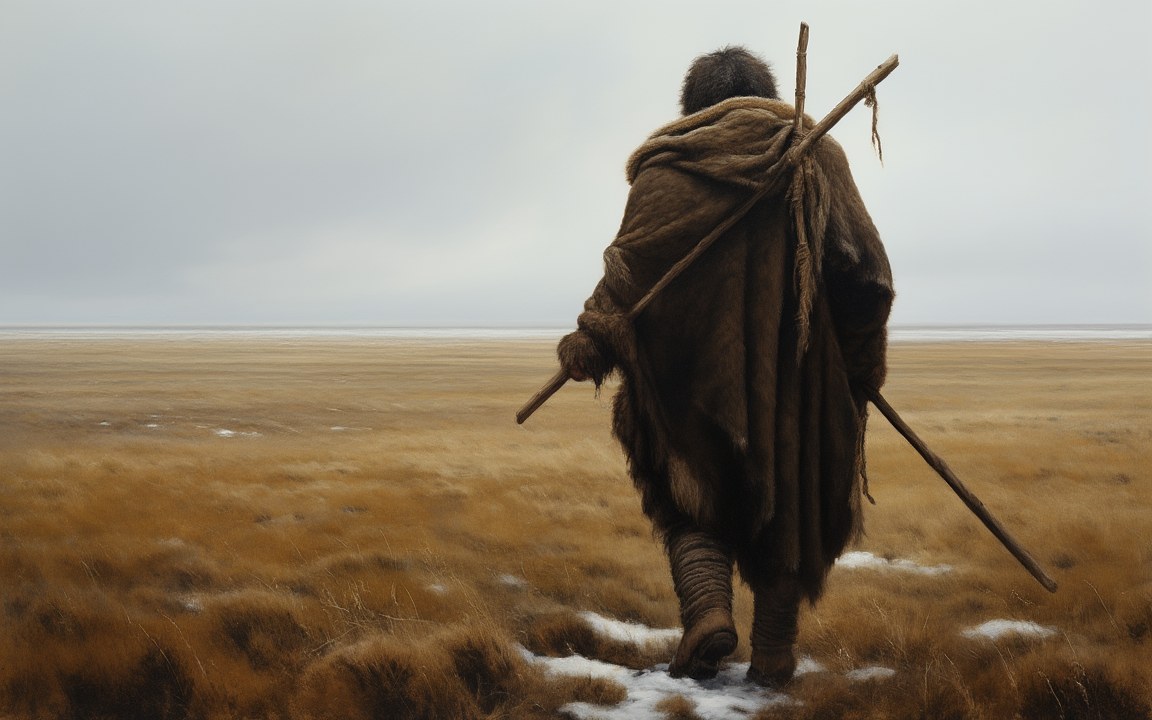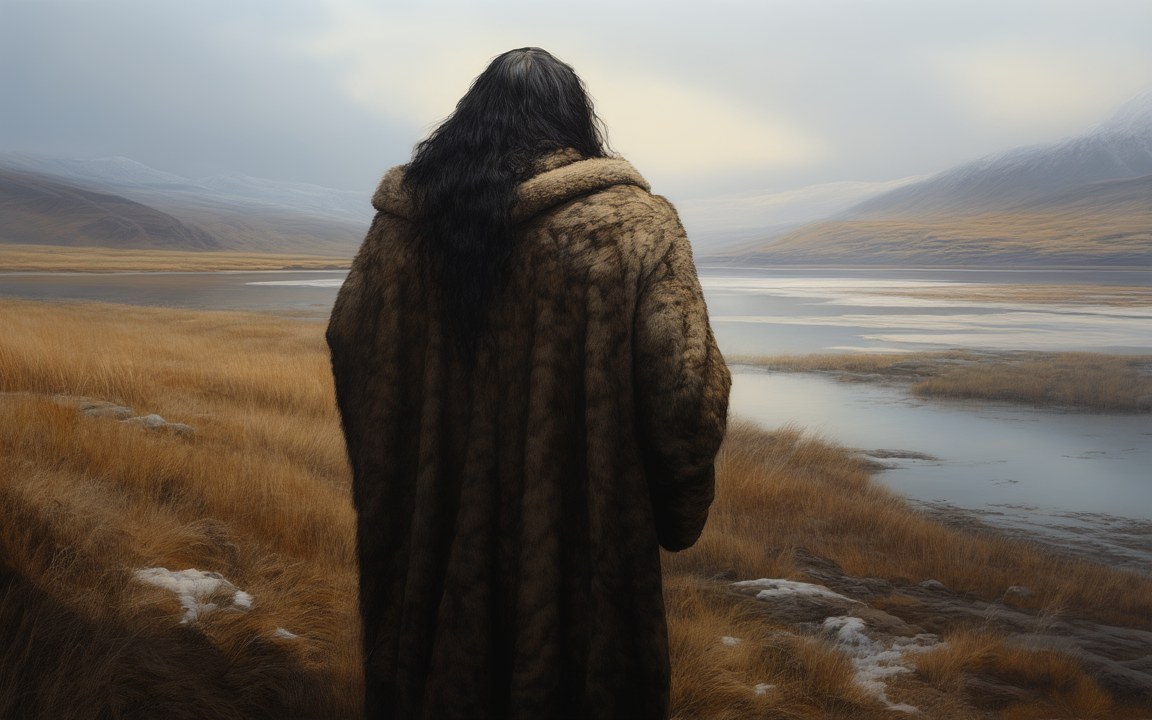
Denisovans are the only kind of human that was discovered from its DNA before anyone knew what it looked like. In 2008 archaeologists at Denisova Cave in the Altai mountains of Siberia dug up a tiny piece of a finger bone. Two years later, its DNA turned out to belong to a group of people unknown to science, related to the Neanderthals but distinct from them. For more than a decade they had no face. Since 2025, a run of discoveries in China has finally given them one.
A face at last
The breakthrough came from a skull reportedly found in 1933, when workers were building a bridge over the Songhua River at Harbin in northeastern China. It was named Homo longi, “Dragon Man”, in 2021. In 2025 two studies showed what it was. One recovered 95 proteins from the skull, with three variants found only in Denisovans; the other read DNA from the hardened plaque on its one surviving tooth. Both matched the Denisovans. Ni, who helped name Homo longi, has suggested that modern contamination may have affected the DNA; the authors say the variants they used cannot come from modern people. The skull is at least 146 000 years old.
It shows a long, low braincase, the longest of any archaic human skull known, holding a brain of about 1 420 cm³, with thick brow ridges, wide eye sockets, a broad, flat face, a large nose and a very large molar. Since then, proteins have identified Denisovans among fossils from other sites in East Asia: a jaw dragged up by fishermen off Taiwan, five fossils from Bianfu Cave in Yunnan including the first known Denisovan forearm bone, and skulls from Xujiayao that share the Harbin skull’s features. London’s Natural History Museum now calls the Denisovans Homo longi, but no formal name has been agreed.
Where they lived
Denisovans have been found from the Altai mountains of Siberia to southern China and Taiwan, and possibly Laos. At Baishiya Karst Cave, 3 280 m up on the northeastern edge of the Tibetan Plateau, they lived on and off from about 167 000 to about 40 000 years ago, exploiting mostly wild sheep and goats but also large grazers, carnivores, small mammals and birds for meat, marrow and hides, and using bone for tools. A rib from the cave is 48 000 to 32 000 years old, among the youngest Denisovan remains.
How long ago their line began is uncertain. A 2025 study of a crushed, million-year-old skull from Yunxian in China placed it on the Denisovan branch, which, if confirmed, would make the line much older than thought. A 2026 study, however, dated the Yunxian skulls to about 1.77 million years and treats them as Homo erectus, so the question is open.
Denisovans in us
Denisovans met and had children with both Neanderthals and modern humans. One individual from Denisova Cave was the child of a Neanderthal and a Denisovan. Today, people in Island Southeast Asia, Papua New Guinea and Australia carry up to about 4 to 5 per cent Denisovan DNA, and East Asians about 0.1 to 0.2 per cent. Some of it was useful: a gene variant that helps Tibetans cope with life at high altitude probably came from Denisovans.
The colour of their skin and hair is largely unknown. A high-quality genome from Denisova Cave, published in 2012, carries variants that in people today go with dark skin, brown hair and brown eyes, but that is a single individual from Siberia. When and why the Denisovans disappeared, perhaps about 30 000 years ago, is still not understood.