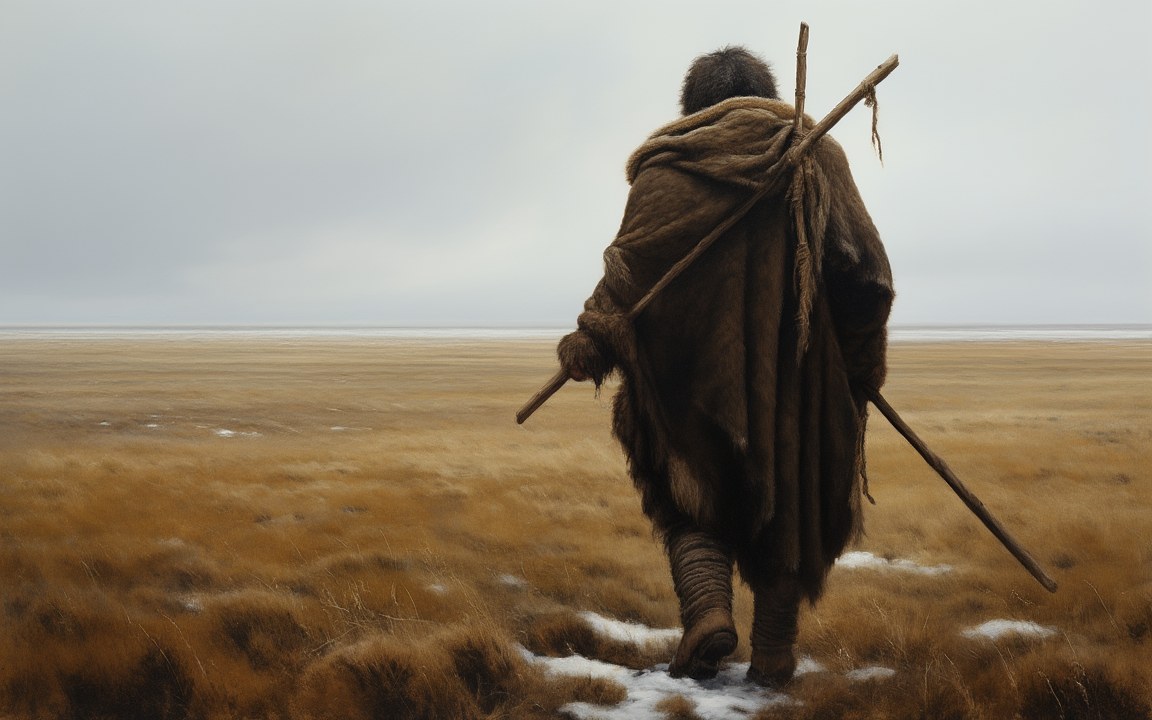
Neanderthals were people. Not our direct ancestors, but close cousins, a separate kind of human that lived in Europe and western and central Asia for hundreds of thousands of years. They made tools and clothing, controlled fire and hunted big game. They met our own ancestors, had children with them, and then, about 40 000 years ago, disappeared. Most people alive today outside Africa still carry a little of their DNA.
Built for strength
Neanderthals were shorter and far more heavily built than most people today. Men averaged about 164 cm and 65 kg, women about 155 cm and 54 kg. They had thick, short limb bones, a deep, wide chest, and in men a pelvis much wider than in modern men. Their skulls were long and low, with a rounded brow ridge over the eyes, a bulge at the back of the head, a large midface with a huge, wide nose, and no true chin. Their brains were, on average, larger than ours: about 1 640 cm³ in men and 1 460 cm³ in women, though organised somewhat differently.
Skilled people
Neanderthals made a distinctive style of stone tools, known as Mousterian, by preparing a stone core and striking off flakes of a planned shape. They made scrapers and awls for working hides, probably laced into loose garments, though there is no direct evidence of fitted clothes, and thrusting spears for hunting. They controlled fire, and may have made glue from birch tar as long as 200 000 years ago.
They were top predators. Most of their meat came from large game such as red deer, reindeer, horses, aurochs, ibex and bison, but at Gibraltar they also ate fish, shellfish, dolphins and seals, and at Kebara Cave in Israel more than 50 kinds of plants have been found. In 2026 researchers described a molar about 59 000 years old from Chagyrskaya Cave in Siberia with a cavity apparently drilled out with a stone point, which they call the oldest known evidence of deliberate dental treatment.
What did they look like?
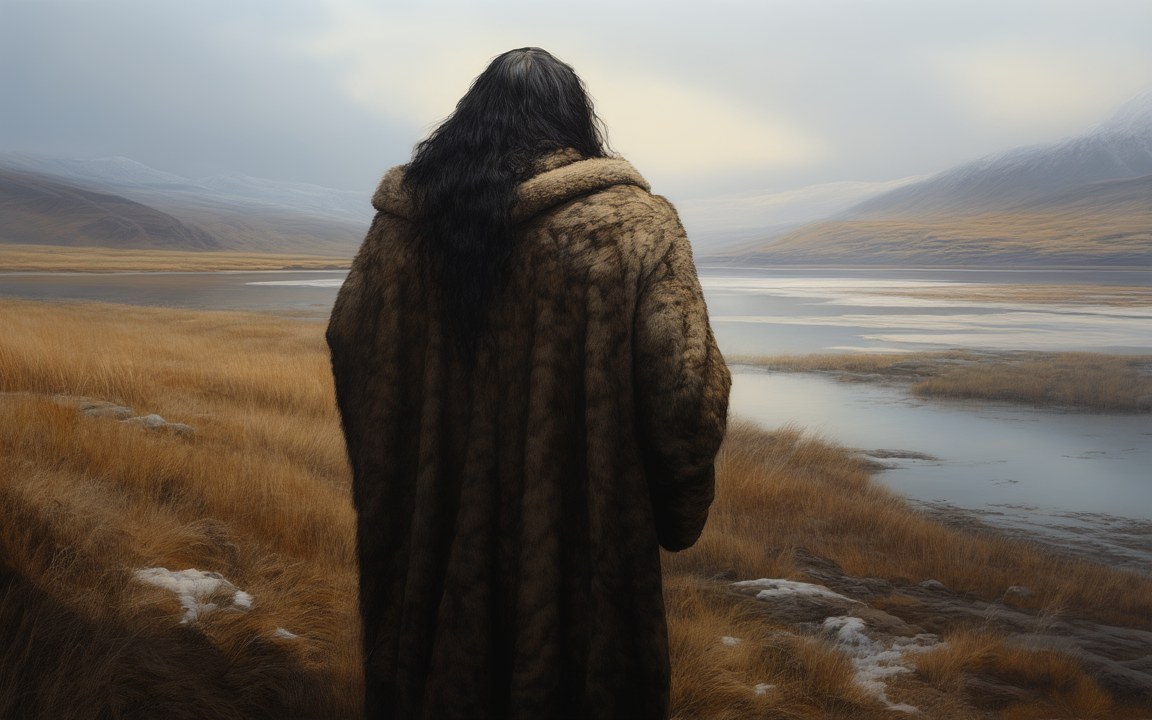
Bones tell us the shape of a Neanderthal head, but not the colour of the skin or hair. Ancient DNA offers some clues. In 2007 a gene variant found in two Neanderthals suggested that at least some had red hair and pale skin. Later work found that Neanderthal genes pushed skin and hair colour in both lighter and darker directions, and that they were probably variable, while red hair does not seem to have been common. Any single colour in a reconstruction, including these paintings, is a guess.
Neanderthals in us
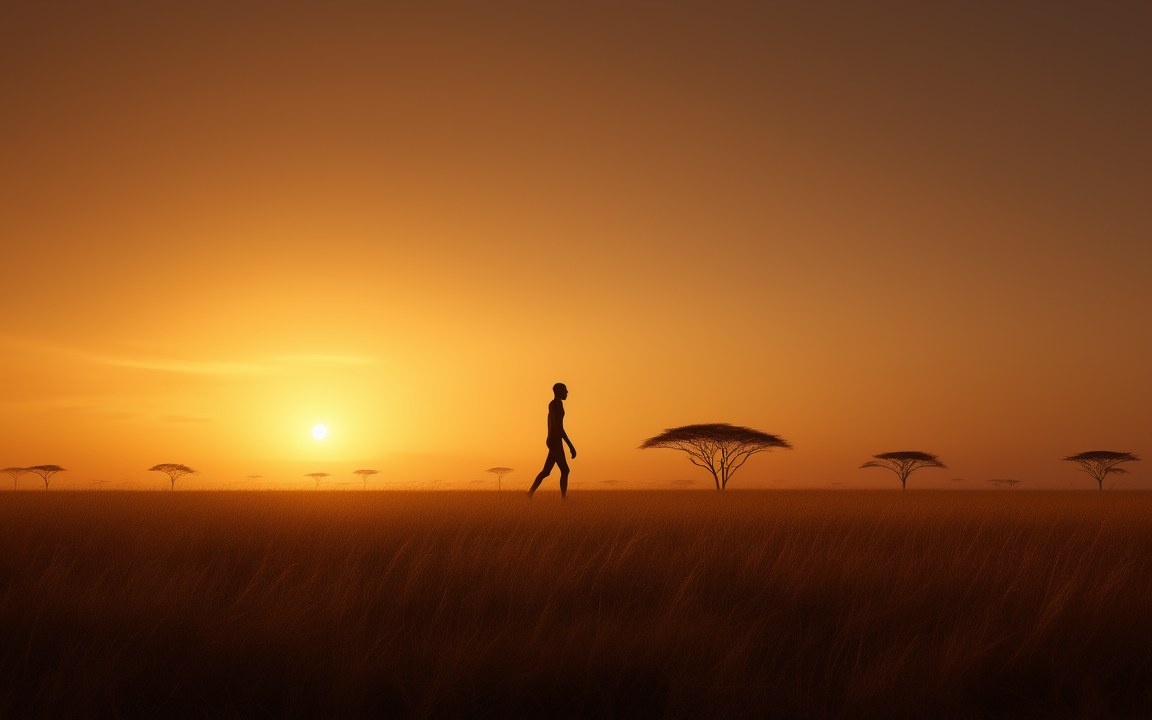
When modern humans moved out of Africa, they met Neanderthals and had children with them. A 2024 study of 58 ancient and 275 present-day genomes found that most of this mixing happened during one long period, about 50 500 to 43 500 years ago. Another 2024 study, of the oldest known modern human genomes, from Ranis in Germany, dated it to about 45 000 to 49 000 years ago. A 2026 study concluded that the mixing was strongly one-sided: mostly Neanderthal men and modern human women. Today, people of non-African descent carry about 1 to 2 per cent Neanderthal DNA.
Why they disappeared
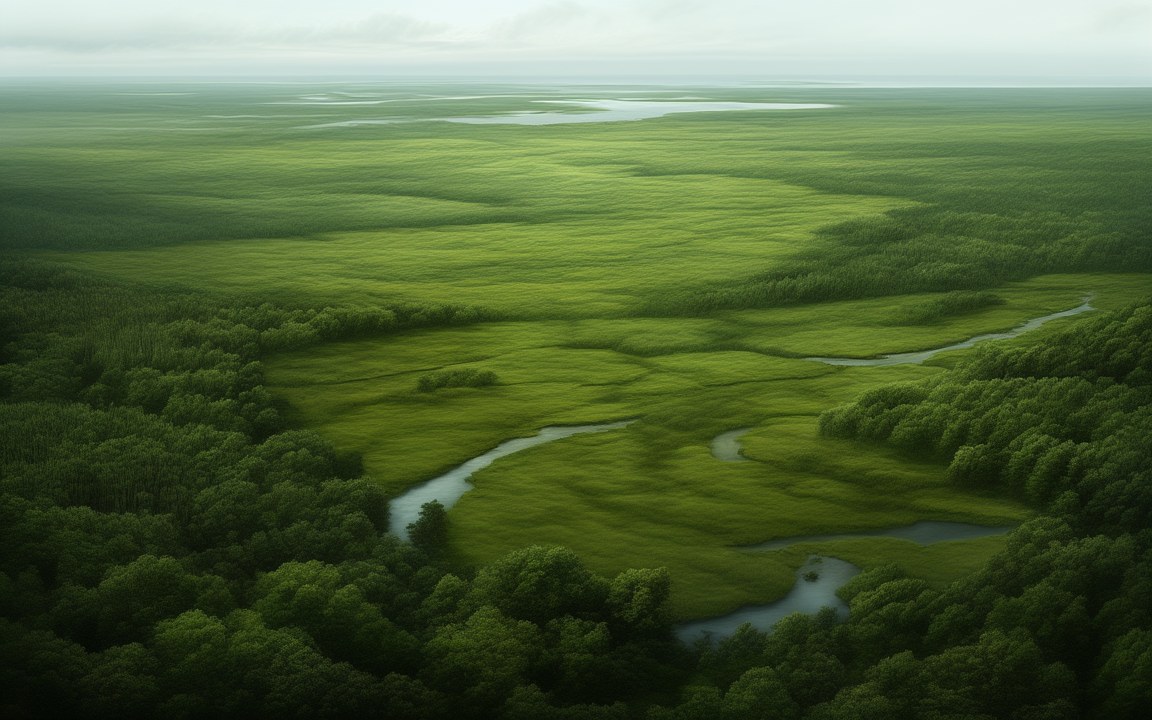
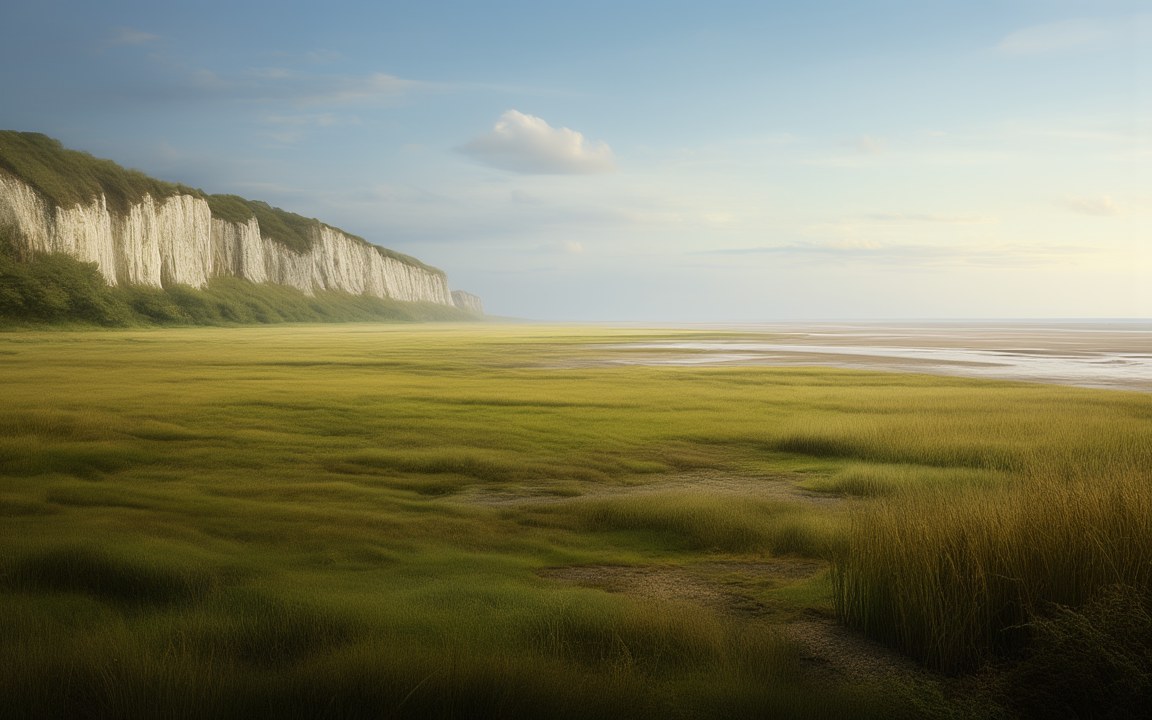
Radiocarbon dates from 40 sites from Russia to Spain show that the Neanderthal way of making tools ended between about 41 000 and 39 000 years ago, after Neanderthals and modern humans had shared Europe for 2 600 to 5 400 years. Why they vanished is not settled. Candidates include competition with the newcomers, being absorbed through interbreeding, small and inbred populations, new diseases and harsh swings in climate. A 2024 study of a late Neanderthal from Grotte Mandrin in France, nicknamed Thorin, found he belonged to a lineage that had been genetically isolated for some 50 000 years, a sign of how small and scattered their groups had become.