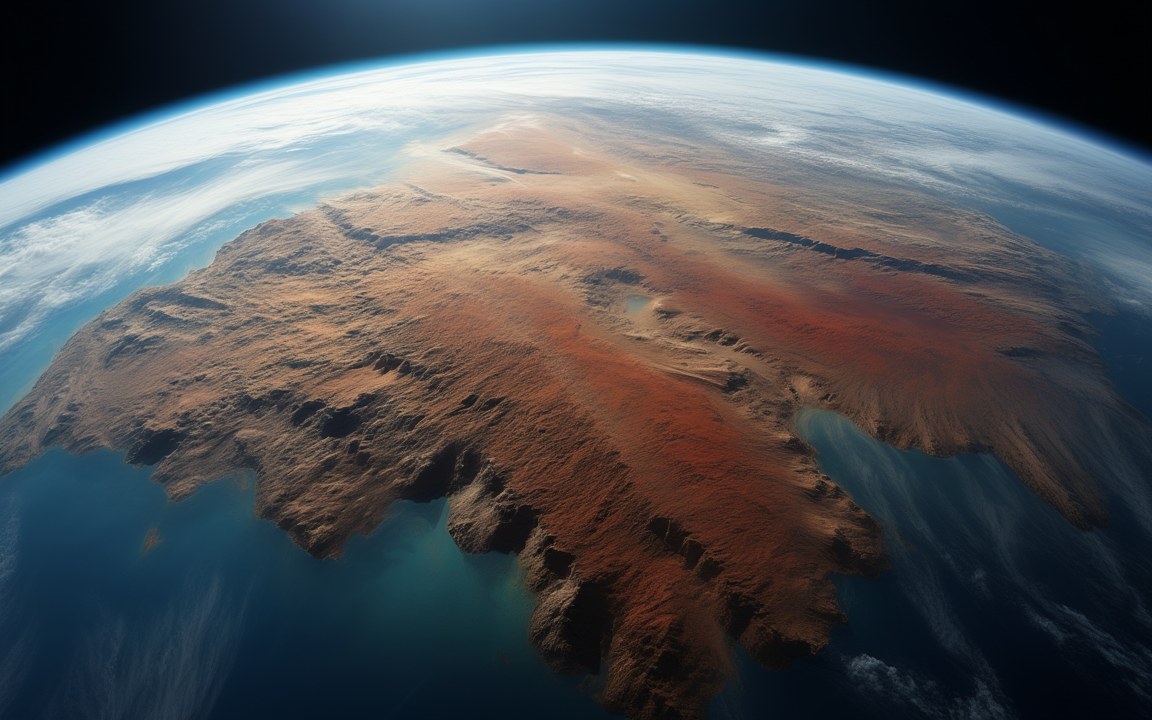
Rodinia was a supercontinent that came together between about 1.26 and 0.9 billion years ago and began to break apart around 750 million years ago. At its heart, in most reconstructions, lay the ancient core of North America, with the cores of other continents packed around it. No plant or animal lived on its land, which was bare rock, sand and mud. Rodinia matters because its pieces went on to build later supercontinents, and because its breakup is thought to have helped tip the planet into the Snowball Earth glaciations.
A motherland without a fixed map
The idea is older than the name. In 1970 Valentine and Moores recognised a Precambrian supercontinent and called it Pangaea I. In 1990 McMenamin and McMenamin renamed it Rodinia, from the Russian rodina, “motherland” or “birthplace”, and made the first plate reconstruction.
Since then the broad picture has held, but the details have not. Most maps put the North American craton in the middle, with the cratons of eastern Europe, the Amazon and West Africa to its south-east, Congo and Kalahari to the south-west, and Australia, India and East Antarctica to the north-east. The trouble is that magnetism frozen into old rocks records how far from the equator a piece of crust lay, but not its longitude. That leaves room for rival fits, known by acronyms: SWEAT places East Antarctica against the south-western United States, AUSWUS puts Australia west of North America, AUSMEX puts it beside what is now Mexico, and the Missing-link model slips South China between Australia and western North America. One researcher, Piper, rejects Rodinia altogether, though his reading of the magnetic data has been widely criticised.
Built in collisions
Rodinia grew from the fragments of an older supercontinent, Columbia, also known as Nuna. Between 1.8 and 0.8 billion years ago the continents gathered and scattered twice, first as Nuna and then as Rodinia. A 2025 study found that when Nuna broke apart about 1.46 billion years ago, the total length of shallow continental shelf more than doubled, to about 130 000 km, creating oxygenated, temperate seas that may have supported early complex life. Eukaryotes, cells with a nucleus, had already evolved by 1.9 to 1.4 billion years ago.
The collisions that closed the gaps raised long mountain belts. In North America this is the Grenville orogeny, about 1 250 to 980 million years ago, a belt running from Labrador to Mexico and on into Scotland. Its counterparts are the Kibaran in Africa, the Dalslandian in western Europe and the Sunsás in Brazil. Two of the collisions are compared to the one now raising the Himalaya. Rocks from this mountain building are exposed today in the Adirondacks of New York and the Llano Uplift of Texas.
Bare rock, living water
Rodinia had no plants or animals on its land, unlike Pangaea. Ultraviolet light, less filtered by an ozone layer that was not as extensive as today’s, is thought to have kept life out of its interior. Almost all life stayed in the water. Microscopic eukaryotes did reach fresh water and exposed ground: fossils from the Torridonian rocks of north-west Scotland, 1.2 to 1.0 billion years old, show them there. The red alga Bangiomorpha, from rocks on Baffin Island in Canada, is about 1.047 billion years old, and molecular clocks calibrated on it suggest that photosynthesis in such cells began about 1.25 billion years ago.
Oxygen had been scarce for a long time, below 0.1 per cent of today’s level through most of the preceding one and a half billion years. Estimates from isotopes suggest it rose above 13 per cent of today’s level between about 900 and 815 million years ago. The days were short too: from about 2 to 1 billion years ago, as Rodinia was beginning to form, a day lasted only about 19 hours. Around the whole supercontinent lay a proposed world ocean, Mirovia, from the Russian for “global”.
The long breakup
Rodinia came apart slowly. A 2009 international project concluded that it broke up in four stages between 825 and 550 million years ago, and the main breakup is usually dated to about 750 to 633 million years ago. The central part of the supercontinent reached the equator around 750 to 700 million years ago while rifting continued. Mirovia shrank as a new ocean, Panthalassa, grew at its expense.
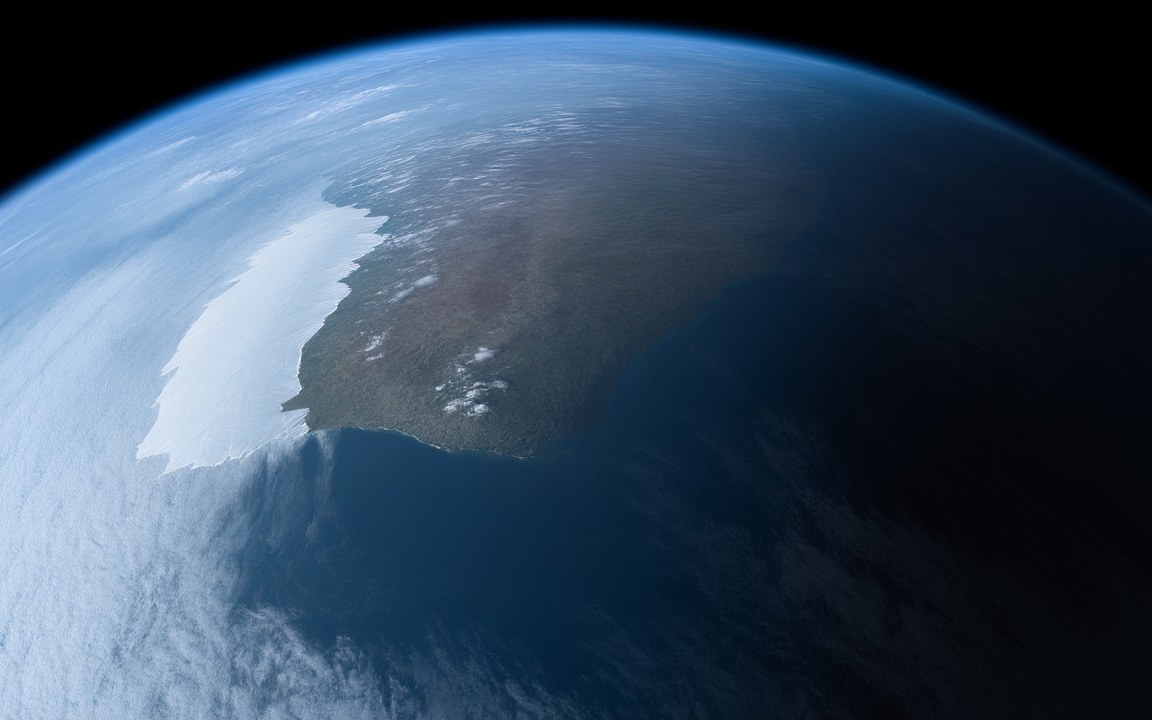
The breakup is thought to have helped trigger Snowball Earth, although a slowdown in tectonic activity has also been proposed, and during those glaciations substantial parts of Rodinia may have been covered by ice. Its fragments were later gathered into a proposed supercontinent, Pannotia, between about 633 and 573 million years ago, and then into Gondwana.