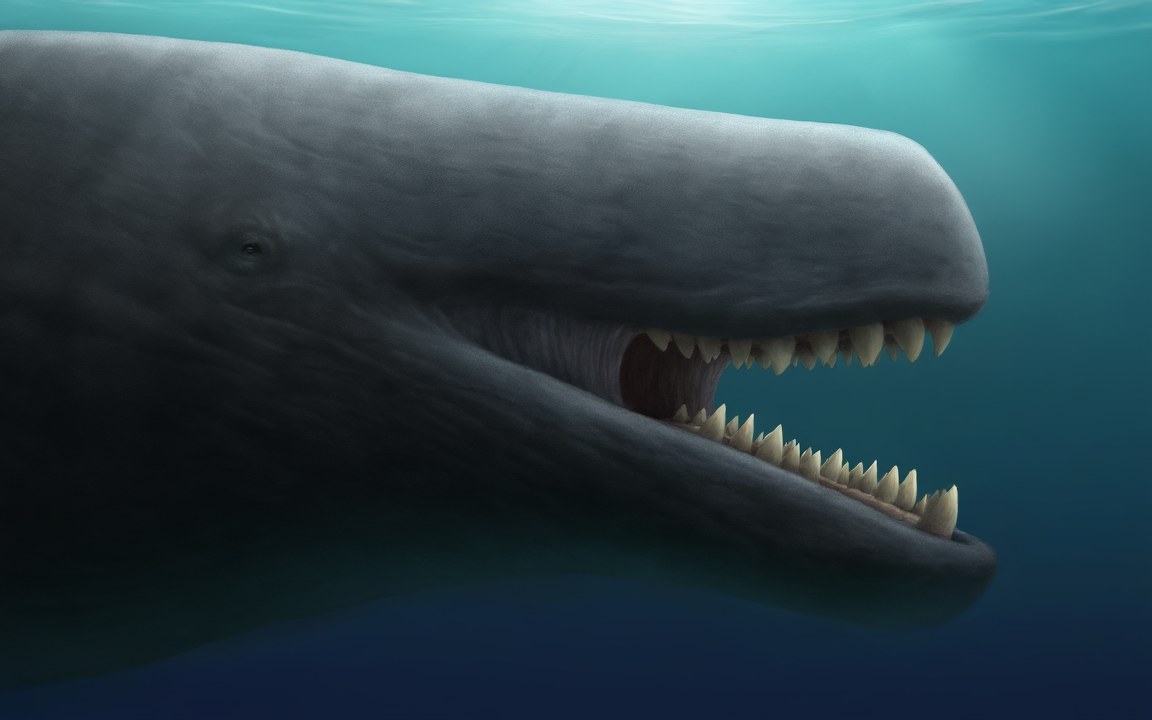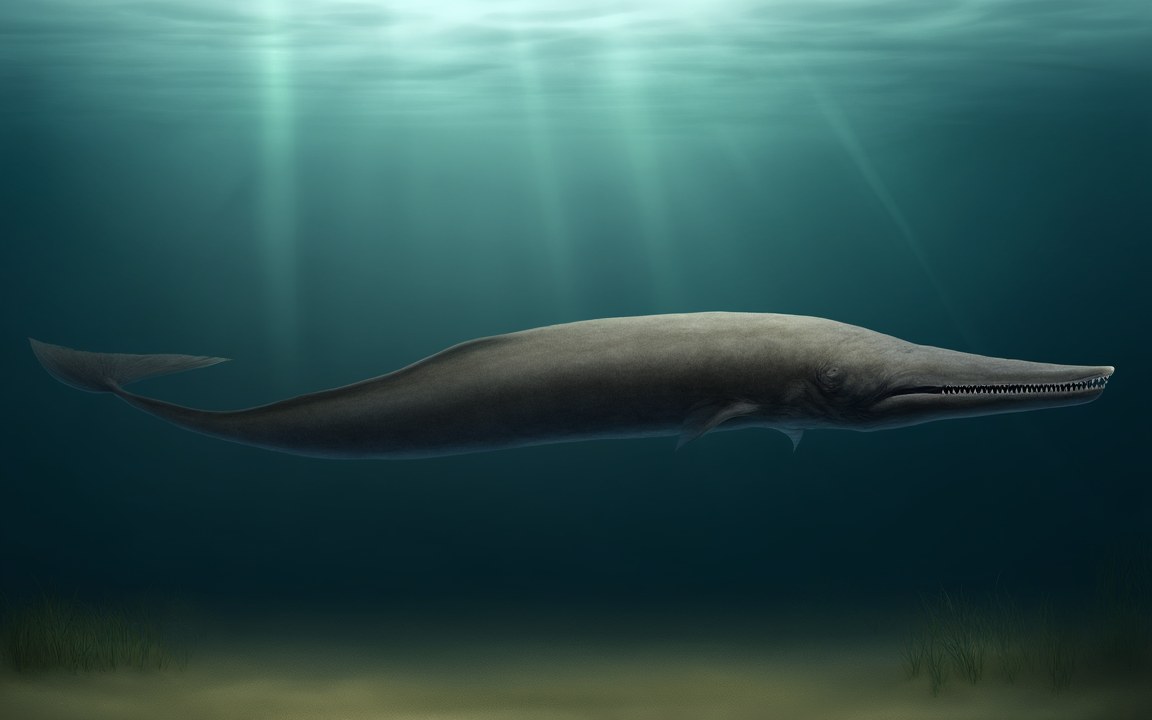
Basilosaurus was a whale, and probably one of the first to live entirely in water, although its name means “king lizard”. It swam warm coastal seas in the late Eocene, about 38 to 34 million years ago, and grew to between 15 and 20 m long, with a stretched, slim body, a long toothed snout and hind legs far too small to carry it anywhere. Its fossils come from the southeastern United States, North Africa and Jordan, and a valley in the Egyptian desert is named after the whales found there.
A lizard by mistake
Rain once set a hillside sliding in Ouachita Parish, Louisiana, and exposed huge bones lying in a curved line. Many were used as andirons and destroyed. Bry in Louisiana and Creagh in Alabama sent vertebrae to the American Philosophical Society, and they reached the anatomist Harlan, who took the animal for a marine reptile at least 24 m long, and in 1834 he called it Basilosaurus.
He took the specimens to England, where Owen saw that the cheek teeth had two roots each, a pattern unknown in fishes and reptiles. It had to be a mammal, and Owen linked it with whales, although he thought it ate plants. He proposed a new name, Zeuglodon, after those double-rooted teeth, and Harlan agreed, but the older name is the valid one. The confusion had a sequel in 1845, when Koch tied two skeletons together and showed them as a sea monster about 35 m long.
Long body, small legs
Most of the length lay in the chest, lower back and front of the tail, where the vertebrae are stretched. In one adult from Egypt the longest measure 350 to 360 mm each. Voss and colleagues count 66 vertebrae in B. isis, though an earlier reconstruction gave 70. They were filled with marrow in life and were probably buoyant, so the animal probably swam mainly at the surface and was not built for deep diving or sustained swimming. The shape of the tail bones suggests a small fluke.
A 1998 study gave more than 5.8 tonnes for B. cetoides and nearly 6.5 tonnes for B. isis. In 2025 Paul and Larramendi restored an 18.35 m B. cetoides at about 15 tonnes.
The hind legs are its best-known feature. A paper by Gingerich, Smith and Simons in 1990 described foot bones from Egypt. On a 16 m B. isis the legs were about 35 cm long, with fused ankle bones and three toes. They did not join the spine, so they cannot have borne weight. Analysis suggests they could move rapidly between just two positions, and they may have guided the long bodies during mating.
What it ate
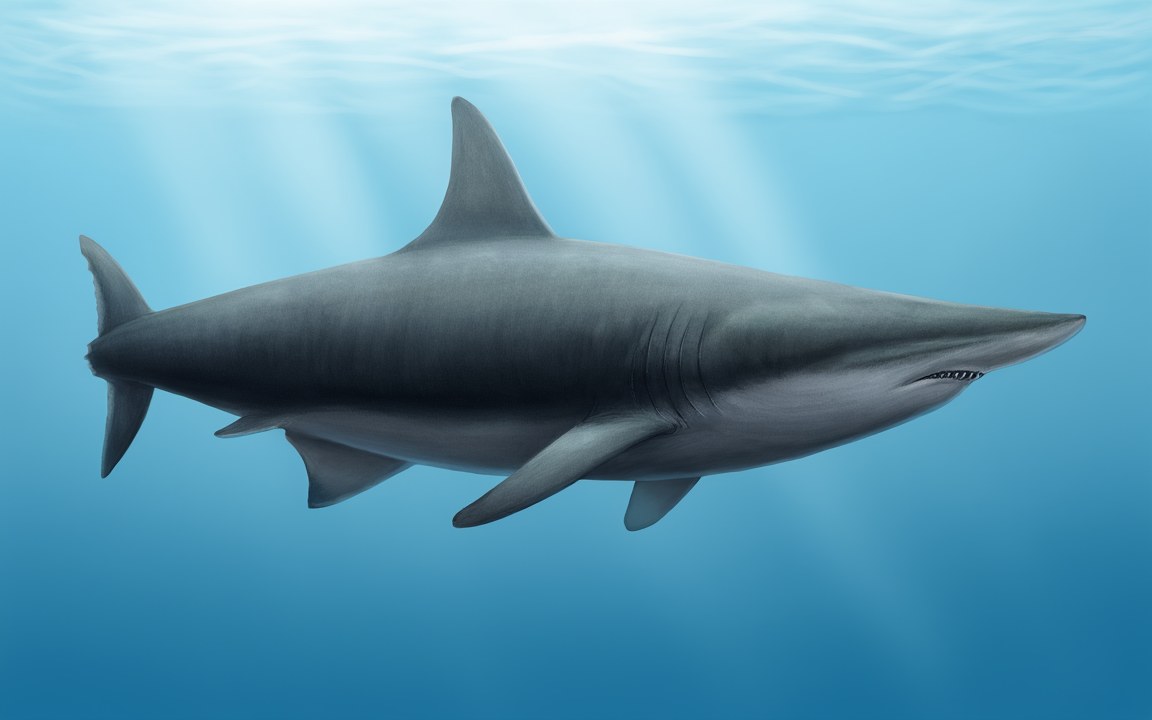
The most direct evidence comes from skeleton WH 10001 at Wadi Al Hitan, an adult about 37.5 million years old. Among its bones, Voss and colleagues found the remains of young Dorudon atrox and of the large fish Pycnodus mokattamensis, the first direct evidence of what B. isis ate. Stomach contents of B. cetoides, reported earlier, were fishes and sharks up to about 50 cm long.
Several Dorudon skulls from the same valley have bite marks on the skull roof. Using models of the jaw, Snively and colleagues calculated in 2015 that B. isis could bite with at least 16 400 N, and perhaps over 20 000 N. Unlike modern whales it had several kinds of teeth, and heavy wear on them suggests it chewed its food before swallowing.
Shallow seas and a disputed shore
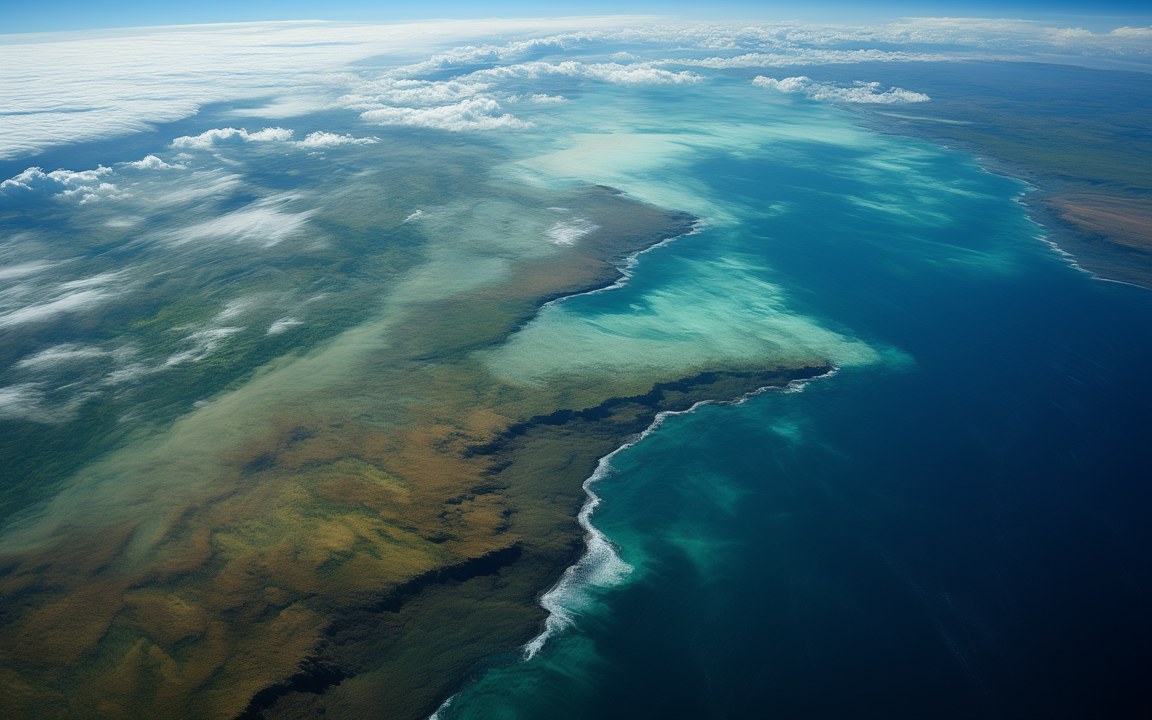
B. isis ranged from southern Morocco to Wadi Al Hitan and eastern Jordan. B. cetoides is best known from Alabama, then a shallow sea, and is the state fossil of Alabama and Mississippi. Wadi Al Hitan, a World Heritage Site since 2005, and nearby Qasr el-Sagha have yielded more than 500 skeletons of early whales.
What grew on the nearby coast is less clear. A World Heritage data sheet describes mangrove-fringed estuaries and fossil mangroves with upright breathing roots at the site. In 2018 Gee and colleagues reinterpreted the main layer of those supposed roots as fossil burrows. In 2020 Abdel-Fattah and Gingras argued the opposite for structures at the site, reading them as the trunks and roots of a mangrove swamp at the edge of a bay. The mangroves remain in dispute.
The fossil record of Basilosaurus ends between about 35 and 33.9 million years ago, around the Eocene–Oligocene extinction, which has been linked to global cooling and changing ocean circulation. It left no descendants, although modern whales arose from within the wider basilosaurid group.