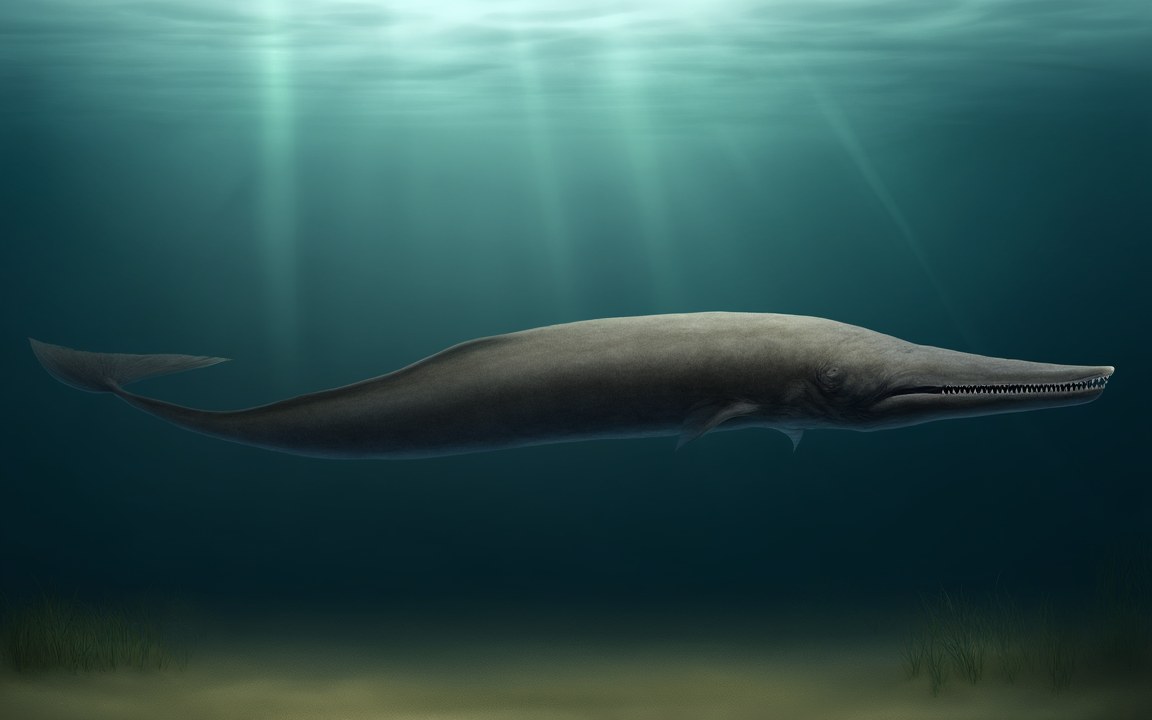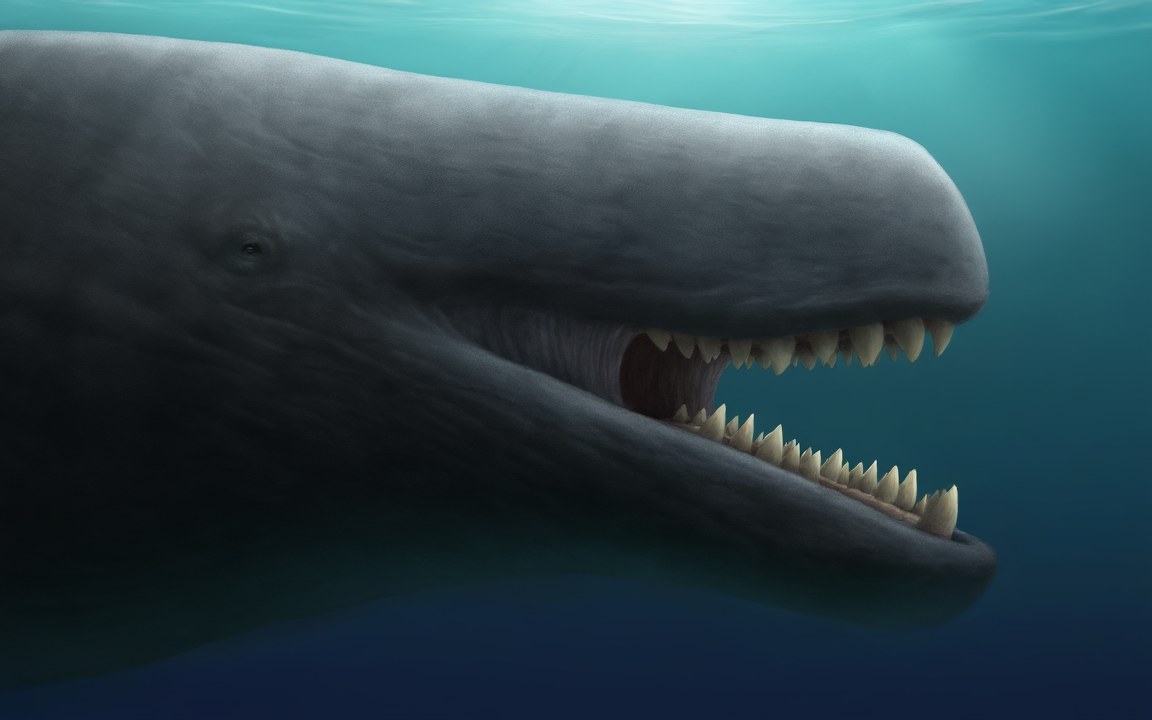
Livyatan was a sperm whale that hunted other whales. It lived in the Pacific off what is now Peru about nine million years ago, and it had something no living sperm whale has: huge teeth in both its upper and lower jaws, the largest more than a third of a metre long. When it was described in 2010, its discoverers called its bite the biggest of any four-limbed animal ever found.
One skull in the desert
Almost everything known about Livyatan comes from a single partial skull with its lower jaw and teeth, found in November 2008 in the Pisco Formation at Cerro Colorado, in the coastal desert about 35 km southwest of Ica.
The skull is about 3 m long. Its snout is shorter and broader than a modern sperm whale’s, with powerful jaws and very large spaces for jaw muscles. The teeth are capped with enamel; the largest measures 36.2 cm, and some are 12 cm across. The skull held 22 teeth in the lower jaw and 18 in the upper.
The team first named it Leviathan melvillei, after the sea monster of the Bible and Melville, the author of Moby-Dick. The name Leviathan had already been used for a mastodon in 1841, so in August 2010 they changed it to Livyatan, the Hebrew spelling.
How big?
Without the rest of the body, its size has to be estimated from the skull. Scaled like a modern sperm whale, it comes out at about 13.5 m. Scaled like a smaller fossil relative with a proportionally smaller head, it reaches 16.2 to 17.5 m, and at that size it would have weighed about 57 tonnes. A 2025 study that placed it in a new position in the sperm whale family tree gave estimates from about 11.5 to 16 m, though its lowest figures may be too low.
A whale that ate whales
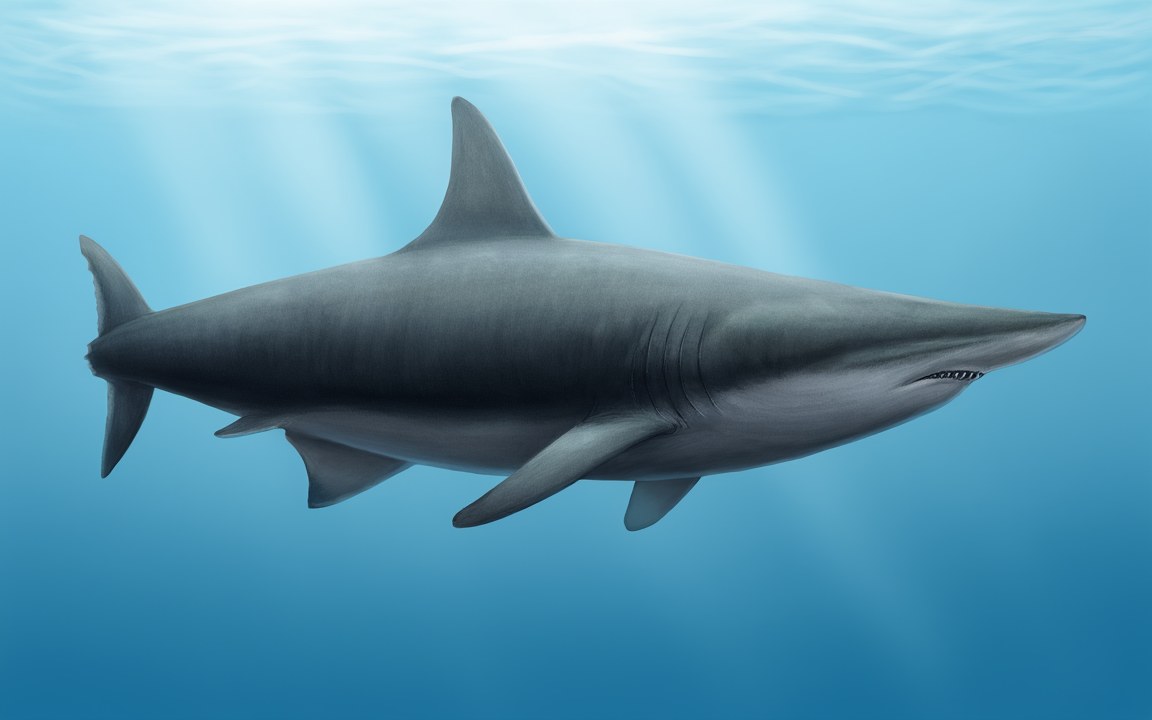
Its long teeth in both jaws show that it caught large prey with its bite, unlike today’s sperm whale, which has no working upper teeth and feeds by suction. The researchers who described it suggested its main prey were medium-sized baleen whales 7 to 10 m long. It probably also took sharks, seals and dolphins, and isotopes in one tooth from Chile suggest that individual did not commonly eat baleen whales. The giant shark megalodon swam in the same seas at the same time, and the two may well have competed for the same whales.
The top of its skull holds a large basin that probably contained an enlarged spermaceti organ, the oil-filled structure in a sperm whale’s head. In Livyatan it was not linked to deep diving. Its purpose is unknown; suggestions include echolocation, ramming and buoyancy control.
Beyond Peru
Teeth from similar giant sperm whales have since turned up in Chile, Argentina, South Africa, Australia, the Netherlands and California. A tooth from Orange County in California, described in 2025, is over 25 cm long even with its tip broken off, and shows that these whales also lived in the North Pacific.
They were gone by the early Pliocene, about 5 million years ago. The most likely reason is the cooling climate of the late Miocene, which changed the baleen whales they depended on: the whales became larger and fewer kinds survived, leaving less of the mid-sized prey that Livyatan hunted.