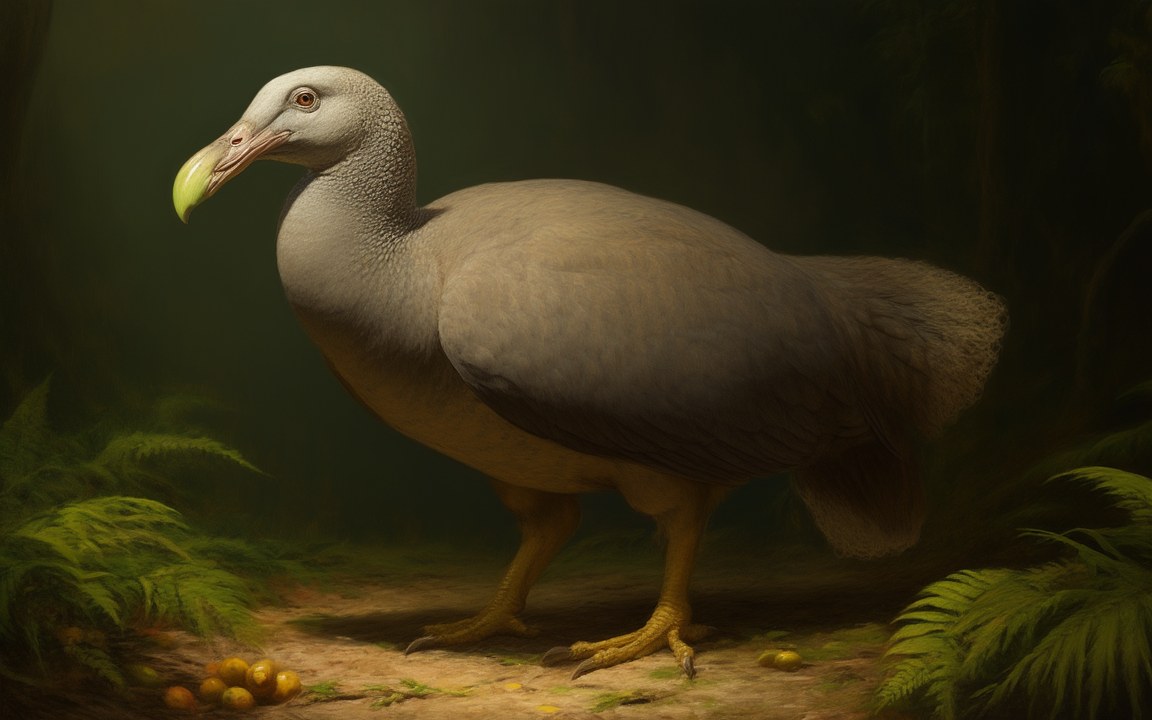
The dodo was a pigeon that gave up flying. It lived on Mauritius, a volcanic island in the Indian Ocean, where it had no predators to run from, and it stood well under a metre tall. Dutch sailors first wrote about it in 1598. The last sighting that most historians accept was in 1662, and within about thirty years it was gone. Photography was not invented for another century and a half, so everything known about how it looked comes from bones, a few written descriptions and a handful of paintings, some of them misleading.
Not as fat as the paintings
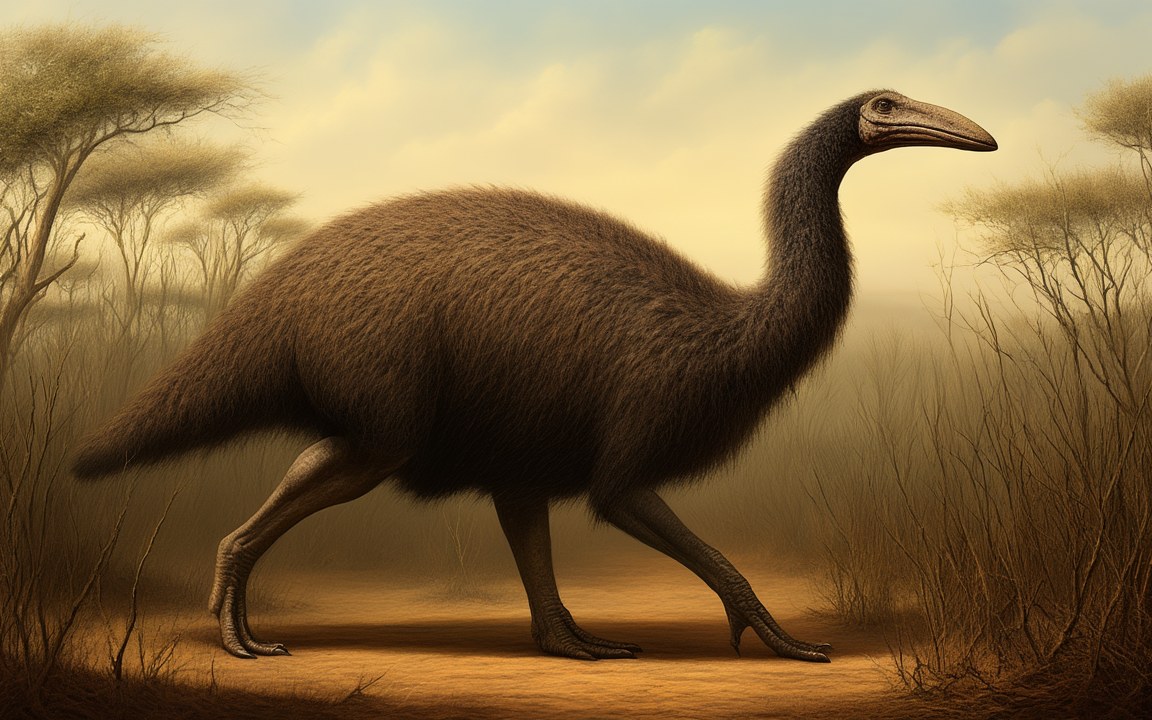
The round, waddling dodo of children’s books comes mostly from 17th-century paintings, above all one by Roelant Savery made in 1626. Several of those painters worked from birds that had been shipped to Europe and overfed in captivity, or from stuffed skins. A painting from Mughal India, made around 1625 and attributed to the artist Mansur, shows a slimmer, brownish bird, and some specialists consider it the most accurate picture of a living dodo.
The bones agree with the slimmer version. A 2017 study measured 174 dodo thigh bones and estimated an average weight of about 12.4 kg, well below the 21 kg once proposed. The authors called their paper “Neither slim nor fat”. The weight may also have changed through the year, with birds fattening up when fruit was plentiful.
The only soft tissue left is on a dried head kept in Oxford; a foot kept with it is now mostly bone with scraps of skin. Scans of the head, reported in 2018, found lead shot in its skin and bone.
How it disappeared
Sailors did eat dodos, but hunting alone probably did not finish them. The ships also brought pigs and macaques, which raided the nests the dodo probably built on the ground and ate the same fallen fruit. People also destroyed the forests it lived in.
When exactly the last dodo died is still argued over. Dutch hunting records from Mauritius list dodos for more than two decades after 1662, and statistical studies based on the sightings put the end at about 1690 or 1693. Other researchers think those later “dodos” were a different flightless bird, the red rail.
A normal bird brain
In 2026 an international team led from the University of Lethbridge in Canada, with researchers from Flinders University in Australia, scanned three dodo skulls. They found that the part of its brain used for smell was large, and that it shared several features with birds active at dawn, dusk or night. Its forebrain was the normal size for a pigeon of its size, with no sign that it was any less intelligent than its relatives. The “dumb dodo” seems to be another myth.
Its loss still shows on Mauritius. A 2023 study found that the fruit-eating animals that live on the island today are unlikely to make up for the loss of the dodo and other extinct animals in spreading the seeds of its native plants.
Could it come back?
In 2025 the American company Colossal Biosciences announced that it had grown a type of reproductive cell from pigeons in the laboratory, which it described as a step towards recreating the dodo from its closest living relative, the Nicobar pigeon. That rests on a company announcement and a preprint rather than a peer-reviewed study, and any bird it produced would be an edited pigeon, not a dodo brought back to life.