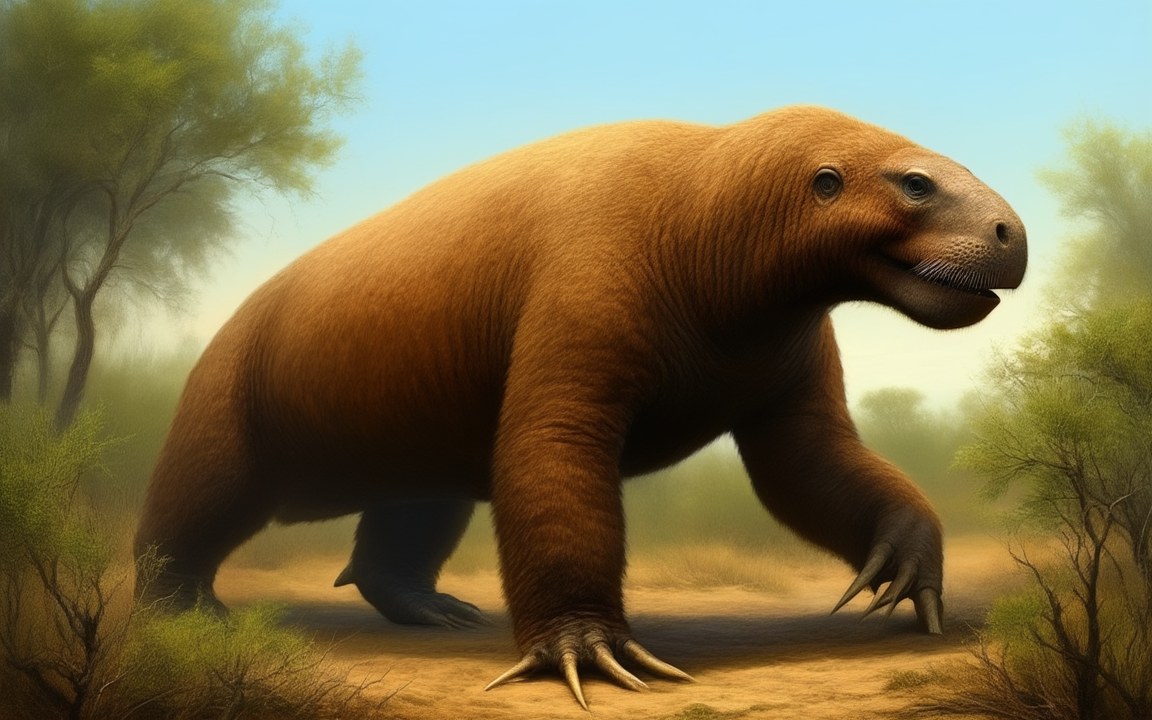
Doedicurus was among the largest of the glyptodonts, the giant armoured relatives of armadillos that once lived in South America. It probably grazed the cold, humid plains of what are now Argentina, Uruguay and Brazil from about 2 million years ago until the end of the last Ice Age or shortly after, under one rigid dome of bone. Its tail is what sets it apart: the end was a solid club about a metre long, which has given researchers an unusual chance to work out how an extinct animal fought.
A tail before an animal
The species was named from its tail. In 1847 Owen described a partial tail that seemed to come from a massive club and called the animal Glyptodon clavicaudatus, “club-tailed”. In 1874 Burmeister moved it to a genus of its own, Doedicurus, “pestle tail”.
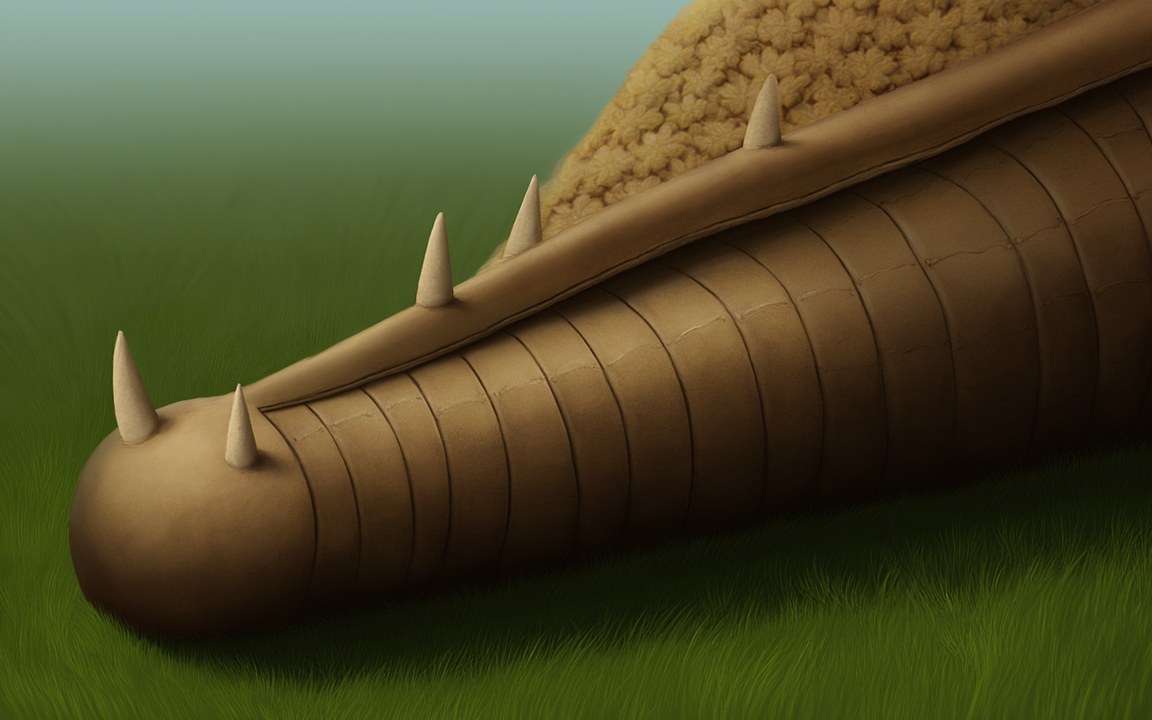
The tail began as a series of bony rings that could move against one another, so the base could bend. Further along, the rings were fused into a single sheath of bone with the tail vertebrae bound inside it. A specimen measured by Blanco and colleagues in 2009 is 105 cm long, and they estimated its mass, with the soft tissue inside it, at about 65 kg. Very large, deep, rough discs towards its end are read as the seats of horny spikes. The spikes themselves do not fossilise well, any more than the horn of a rhinoceros, so their shape and length are guesswork.
Aiming the blow
A bat has a point where a hit does its work with the least jolt to the handle, called the centre of percussion. Blanco’s team calculated that on this club it lay about 77 cm from the base, very close to the centre of the largest socket, on the side of the club towards its far end. That suits an animal swinging its tail from side to side. An earlier study by Alexander and colleagues estimated that the tail muscles could deliver a blow of about 2.5 kJ, with the tip perhaps moving at 15 m/s.
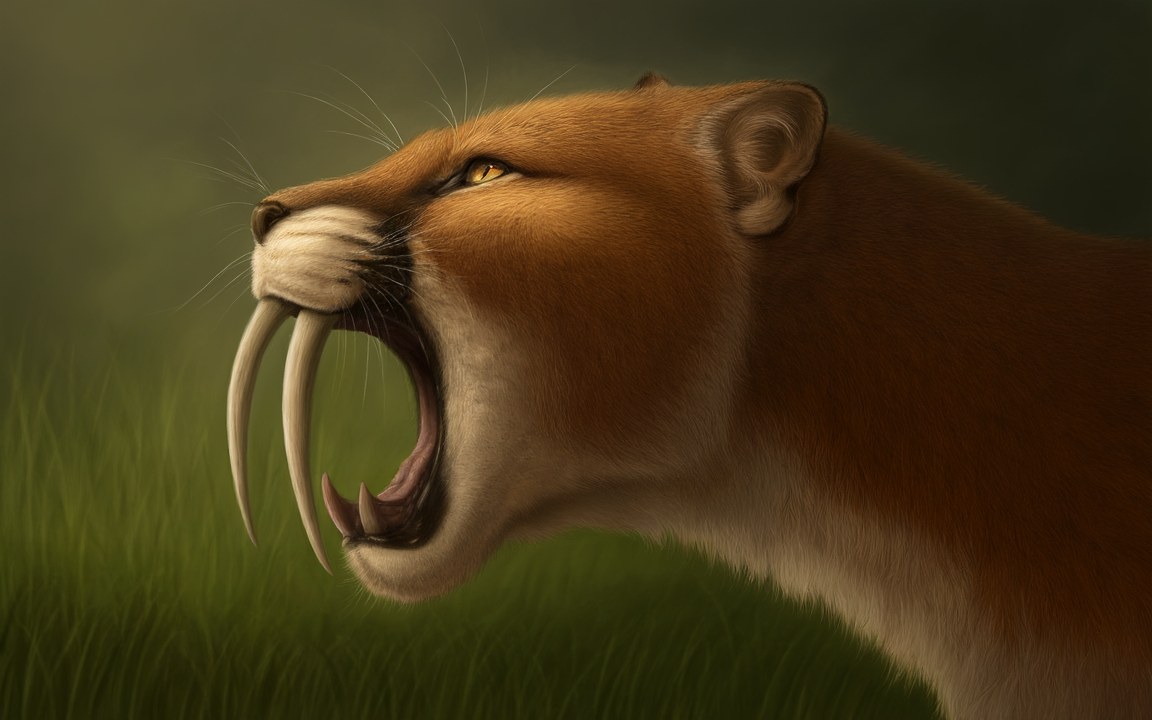
Who received those blows is less certain. Fractures on some glyptodont shells match the calculated force, which points to fights between rivals. Blanco’s team argued that so precise a weapon would be inefficient against fast-moving sabre-toothed cats and better suited to ritualised contests, a hypothesis that has not been confirmed. Predators were certainly around: a 2026 study of bones from Salto de Piedra in Argentina reports a conical groove about 3 cm long and 8 mm deep on a Doedicurus ankle bone, most likely made by Smilodon.
Between 1.4 and 2.4 tonnes
Doedicurus stood about 1.5 m tall and was about 3.6 m long overall, with the largest perhaps reaching 4 m. Its weight is less settled. Fariña and colleagues estimated 1.4 tonnes in 1998. In 2012 Soibelzon and colleagues described the end of a very large upper arm bone from Los Pozos in Buenos Aires Province and calculated 1.9 to 2.37 tonnes for its owner. The Natural History Museum in London gives up to 2.4 tonnes, slightly more than a fully grown black rhinoceros.
The shell was built from many tightly fitted bony plates, smooth-surfaced with large pores in this group of glyptodonts, and it was anchored firmly to the hips but only loosely at the shoulders. The head could not be pulled inside and carried armour of its own.
An armadillo, according to its DNA
Two studies published in 2016 recovered ancient DNA from Doedicurus and reached the same answer: glyptodonts sit inside the family tree of living armadillos, not beside it. Delsuc and colleagues placed them as a subfamily of the family Chlamyphoridae and dated their split to no earlier than about 35 million years ago. Mitchell and colleagues found anatomical features linking them to the tiny fairy armadillos.
The last glyptodont, perhaps
Doedicurus may have been the last glyptodont to survive. The date usually preferred comes from La Moderna in Argentina, where a Doedicurus was butchered on the edge of a swamp, and works out at about 7 800 calibrated years. If those dates hold, people and Doedicurus shared the Pampas for thousands of years. Politis and colleagues argued in 2019, as a later study did, that such Holocene ages are too young because of contamination, and that the animals really belong to the Late Pleistocene. Hunting and climate change are the causes usually proposed for its disappearance.