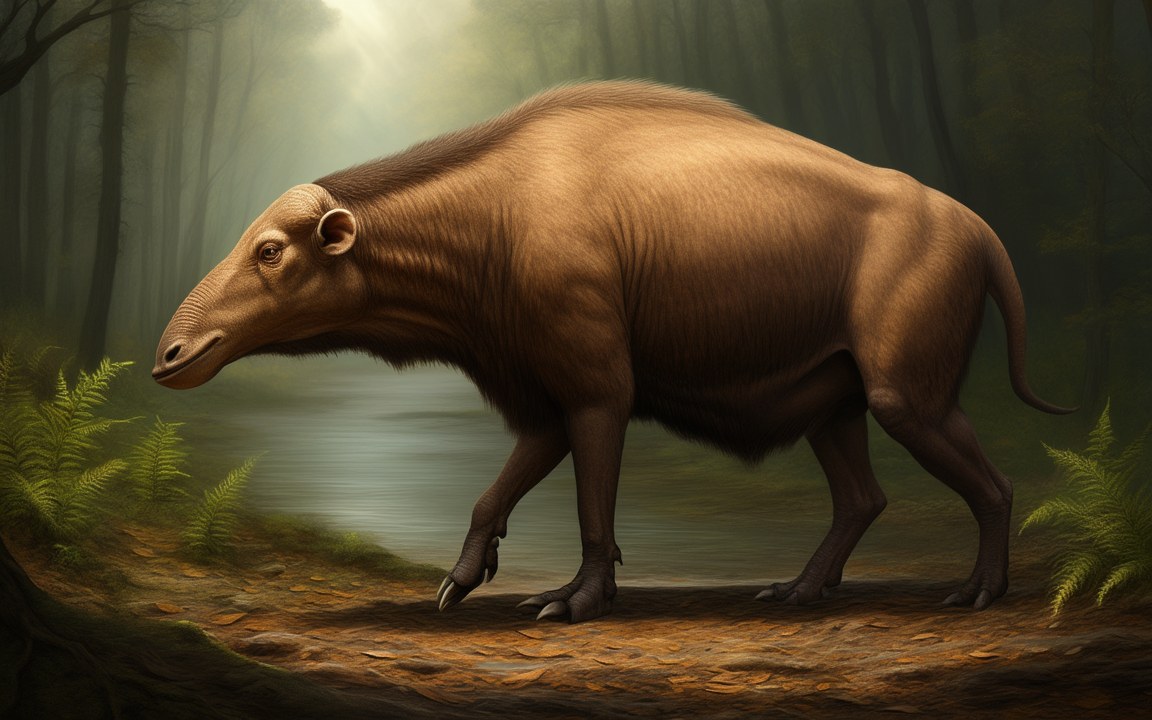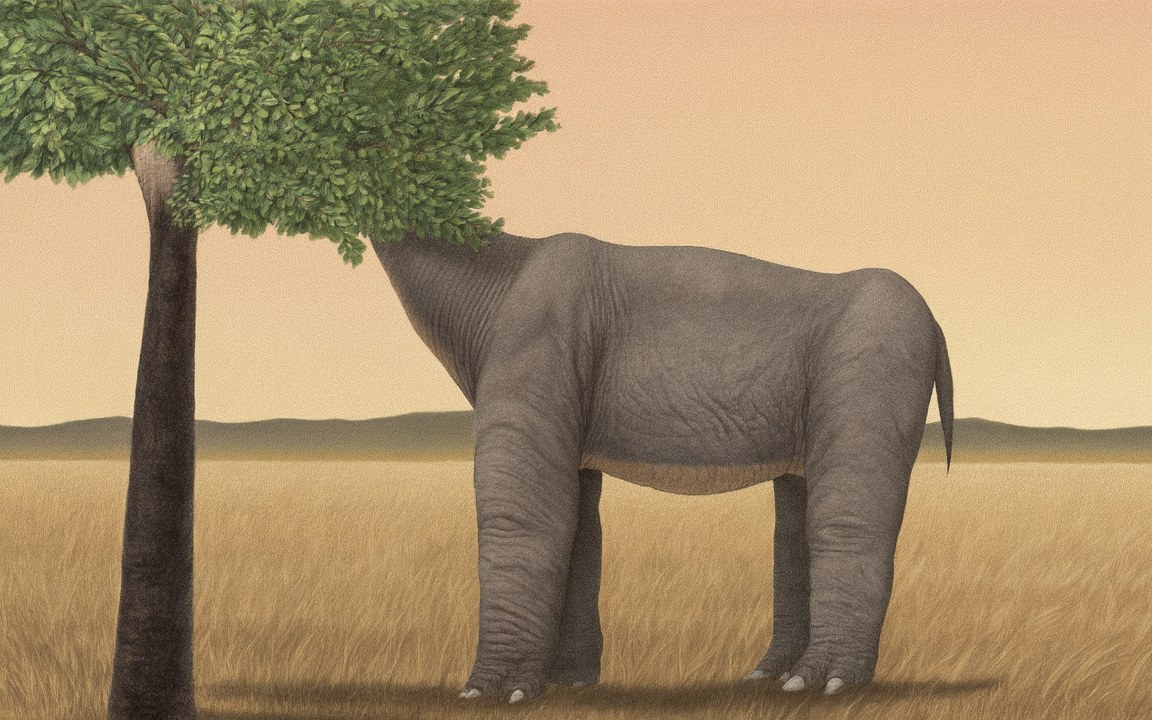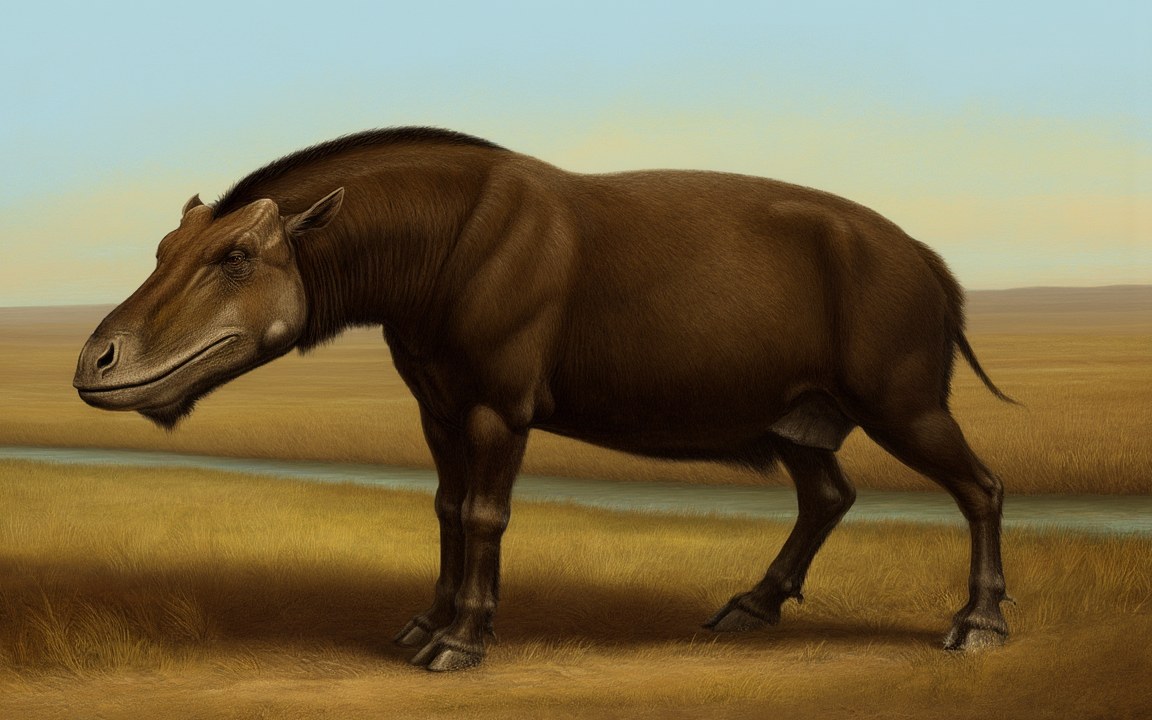
Entelodonts were a family of large, long-legged hoofed mammals, the Entelodontidae, that lived in North America, Europe and Asia from about 45 to 19 million years ago. Popular media call them hell pigs or terminator pigs, although they were probably not close relatives of pigs. Because the word covers several genera that differed greatly in size and diet, a number quoted for “the” entelodont usually describes only one of them.
Which animal the numbers belong to
The largest known from a complete skeleton is Daeodon of North America, the last of the family, which lived about 29 to 19 million years ago. Known adults had skulls of about 90 cm, stood about 1.77 m at the shoulder and reached 3.7 m in length, and large males are estimated at 750 kg or more. Family summaries allow up to 1.9 m at the shoulder, and the National Park Service at Agate Fossil Beds in Nebraska, where the complete skeleton was found, says six to eight feet, well above the published figure.
Archaeotherium, also North American, lived about 35 to 28 million years ago and came in many sizes. The type species, Archaeotherium mortoni, weighed about 150 kg with a 47 cm skull, while Archaeotherium zygomaticus had a skull of about 78 cm. Entelodon, the first genus named, lived in Europe and Asia about 37 to 28 million years ago. Its European species stood about 1.35 m at the shoulder with 65 cm skulls.
Foss noted in 2010 that 56 species had been named in 150 years, because sex and age change the skull so much that few are alike. He recognised only 10 from the White River rocks of South Dakota.
A head built around its bite
The head was enormous: in Archaeotherium mortoni the skull is about 27 per cent of the length of head and body. Bony flanges hang down from the cheekbones, large in Archaeotherium and relatively small in Daeodon, and one or two pairs of knobs sit on the lower edge of the jaw. Foss concluded that both mainly supported muscles for a wide gape, and that in older, larger animals they probably also served for display. The bones of Archaeotherium’s jaw allowed a gape of about 109 degrees. The full set of 44 teeth gives the family its name, meaning “complete teeth”.
Healed bite wounds, concentrated above the sinuses and found only on adult skulls, suggest that they fought by biting each other’s faces, as male camels bite snouts today. A hump over the shoulders, formed by tall spines on the vertebrae, helped carry the head. Long legs and two small, pointed hooves on each foot suited running on open ground, though not at high speed.
What hell pigs really ate
In 2023 Rivals and colleagues studied teeth of Entelodon magnus from the Quercy deposits of France and found wear like that of a wild boar, with no overlap with brown bears. That suggests an omnivore that did not regularly hunt large mammals. A 2026 study by Wooten and DeSantis found that diet in Archaeotherium depended on body size: the teeth of smaller individuals looked most like a cheetah’s, worn by soft food such as flesh, and those of larger ones most like a hyena’s, worn by hard food such as bone.
Daeodon’s premolars show the chipped “piecrust” wear seen in bone-cracking hyenas, and at Agate the bones of the rhinoceros Menoceras and the chalicothere Moropus show signs of being processed by it. Whether it killed them or found them dead is still argued. Foss argued in 2001 that its head was too heavy for pulling down large prey. One circumstantial case for hunting is a cache of partial skeletons of the early camel Poebrotherium from Wyoming, with punctures attributed to Archaeotherium. Even so, the many specialised hunters in the same rocks suggest that entelodonts were not major predators.
Closer to hippos than to pigs
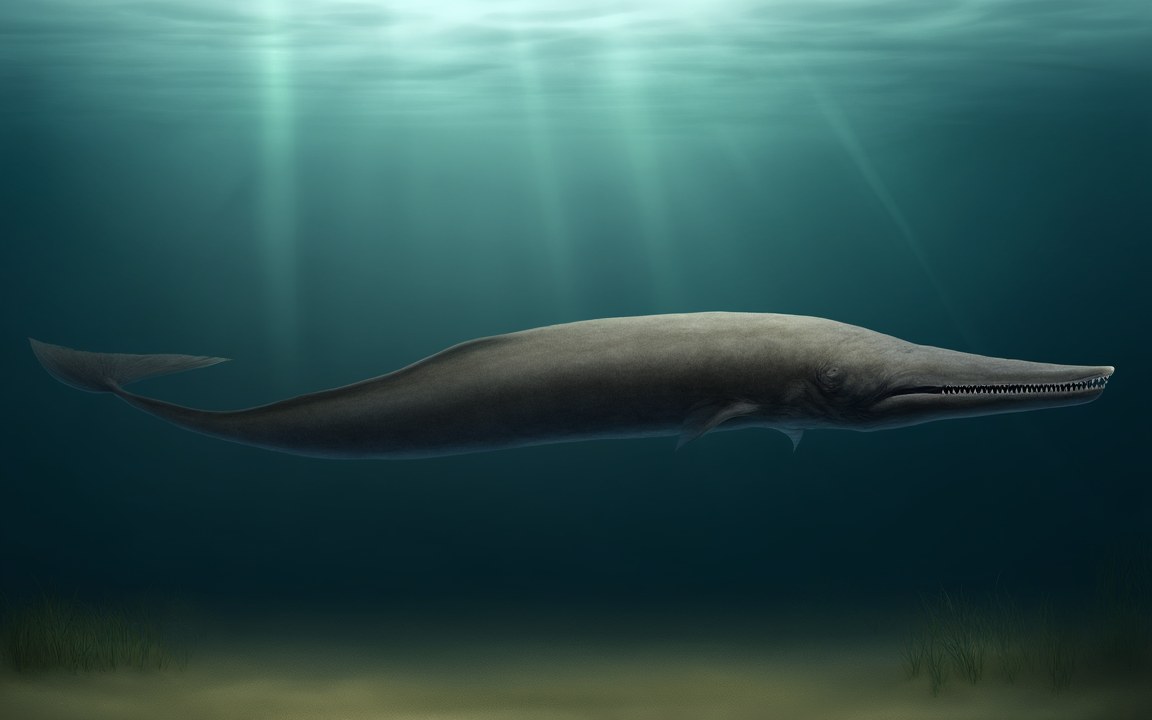
For more than a century entelodonts were grouped with pigs and peccaries, largely on their teeth and low snouts. Analyses that combine anatomy with the DNA of living animals, such as one by Spaulding and colleagues in 2009, instead place them nearer to hippos and whales, and a 2023 study by Yu and colleagues agreed. The placement is still debated. The shift from dense forest to open prairie at Agate has been suggested as a factor in the end of Daeodon, the last of them, about 19 million years ago.