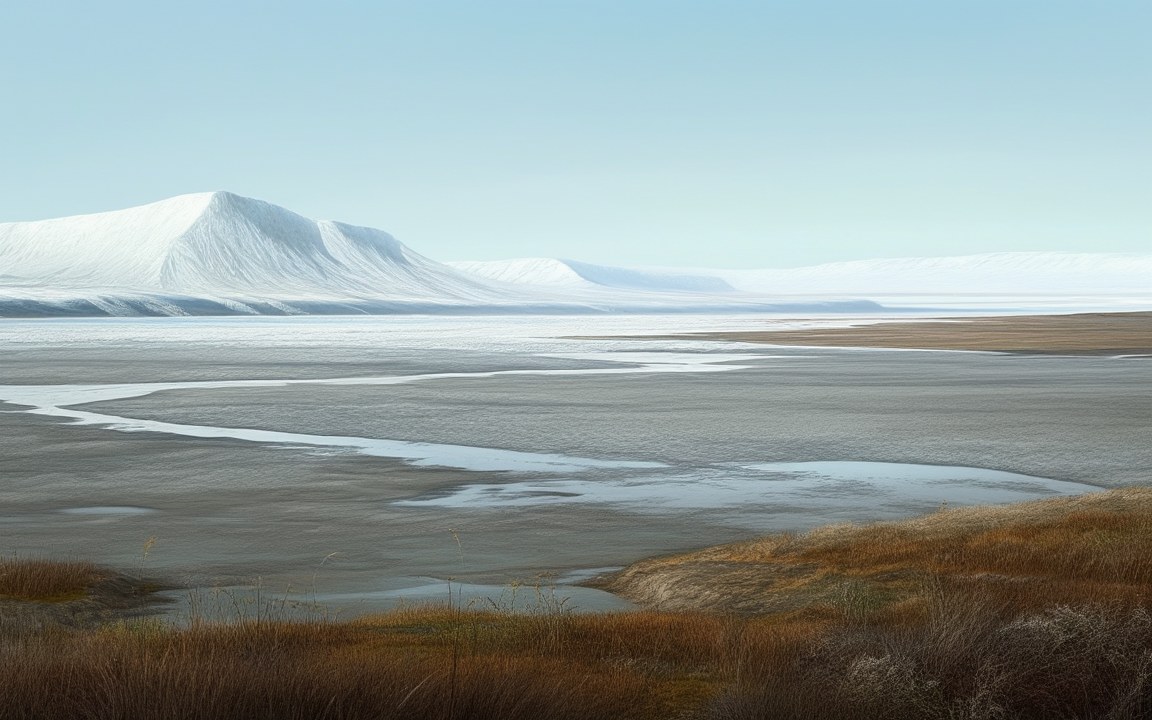
About 12 900 years ago, with the last Ice Age already in retreat, the Northern Hemisphere fell back into near-glacial cold. Greenland cooled by up to 10 °C, tundra replaced forest across northern Europe, and glaciers formed again in the British uplands. The Younger Dryas lasted about 1 200 years and ended around 11 700 years ago, as the present warm epoch, the Holocene, began. Arguably the most widely studied abrupt climate event of its kind, it shows how quickly the climate can turn.
A small flower gives the name
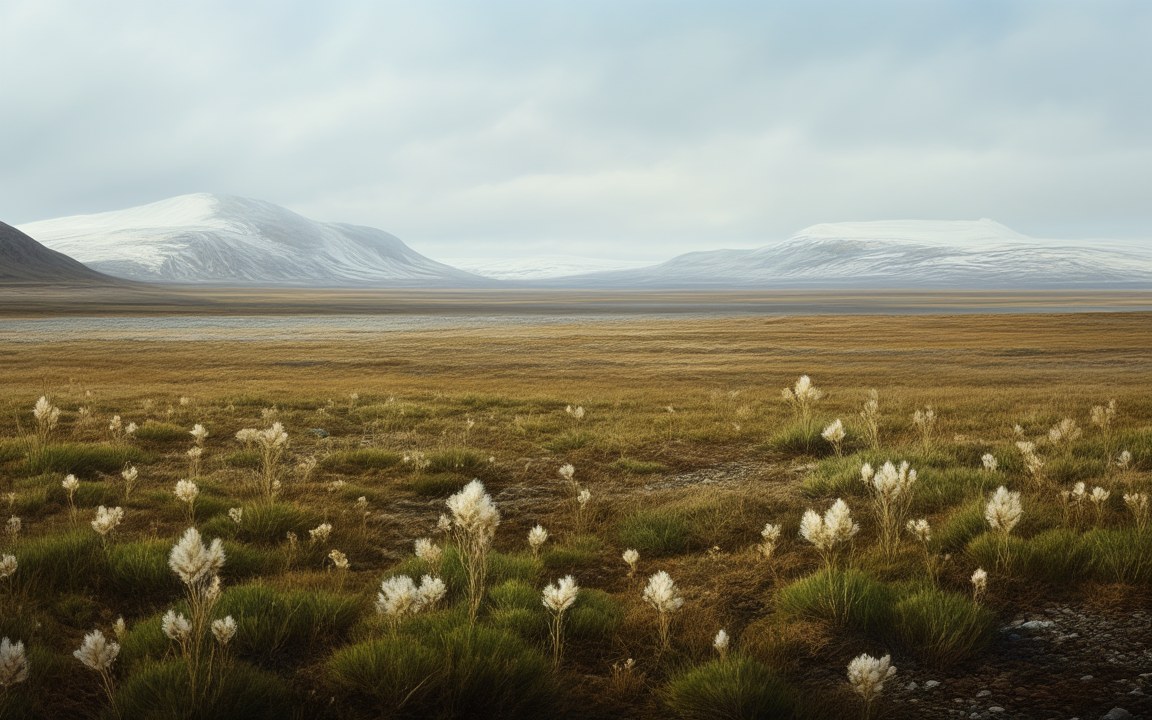
The period is named after Dryas octopetala, or mountain avens, a ground-hugging evergreen of Arctic and alpine places with creamy eight-petalled flowers and feathery seed heads. Around the start of the 20th century, studies of Swedish and Danish bogs and lakes showed it taking over where forest had grown during the preceding warm interval, the Bølling–Allerød.
Cold within a human lifetime
A 2020 study led by Cheng, using cave stalagmites and other records, dated the onset in the North Atlantic to 12 870 years ago, give or take 30, with Asia’s monsoon region changing within a few decades of it and Antarctica later. In Greenland the fall may have taken three years or less. Europe cooled by 2 to 6 °C, and lowland Britain developed permafrost, with mean annual temperatures no higher than −1 °C.
The cold was lopsided. The Southern Hemisphere warmed, so the global change was only about 0.6 °C. Even in the north, winters became much colder and springs cooler while summers changed little. The end came as fast: cooled areas warmed again in about 50 to 60 years.
Why the north went cold
The consensus is that the Atlantic overturning circulation, which carries heat northwards, weakened severely. That would cool the north and warm the south, the pattern actually seen. What weakened it is still debated. The trigger long favoured is a flood of cold, fresh water from Lake Agassiz in North America. Recent research points to a route along the Mackenzie River rather than the St Lawrence. Models suggest a single flood could not hold the circulation down for over 1 000 years without help from other factors, such as spreading sea ice.
Volcanoes are a newer suspect. A 2026 study led by Nana Yobo tied osmium signals in sediments from Florida and Texas to a cluster of major eruptions about 12 980 to 12 870 years ago, recorded in Greenland and Antarctic ice.
The comet idea
In 2007 Firestone and colleagues proposed that one or more objects from space exploded over northern North America about 12 900 years ago, setting off the cooling and contributing to the loss of large animals and the end of the Clovis culture. They pointed to a thin layer at Clovis-age sites holding magnetic spherules, charcoal, soot and nanodiamonds.
The hypothesis is widely rejected by relevant experts and often described as fringe. A 2023 review by 13 specialists led by Holliday found that very few sites with the claimed markers are accurately dated to 12 900 years ago, that plant records show no obvious cataclysm, and that the supporting work relies on flawed methods. No crater of the right age has been found, though proponents reply that a body breaking up in the air, or striking the ice sheet, need not leave one. A platinum spike in Greenland ice, once cited as evidence, came about 45 years after the onset and lasted 14 years, and the authors of a 2025 study favour a volcanic source. Popular claims of a drowned civilisation run against sea-level records, which show no sudden rise across the period. Proponents, organised since 2016 as the Comet Research Group, still publish in support of the idea and reject these criticisms. The cold itself is not in dispute, only this explanation of it.
Reindeer hunters, then birch
North-western Europe saw a significant fall in population during the first half of the cold. In north-central Europe hunters of the Ahrensburg culture took reindeer with bows and arrows: at Stellmoor near Hamburg, a camp used mainly in October, archaeologists have found the bones of 650 reindeer.
When the cold ended, forest did not return all at once. A 2024 reconstruction by Krüger, using pollen from Nahe in the same region, models crowberry making up 50 to 60 per cent of the vegetation late in the Younger Dryas. Downy birch rose slowly until about 11 500 years ago and then quickly, from about 5 to about 20 per cent, while pine stayed near 10 per cent. Krüger calls birch a pioneer, but its stands were fragmented, with few tree-sized birches, far from the simple switch from tundra to birch forest that is often pictured.