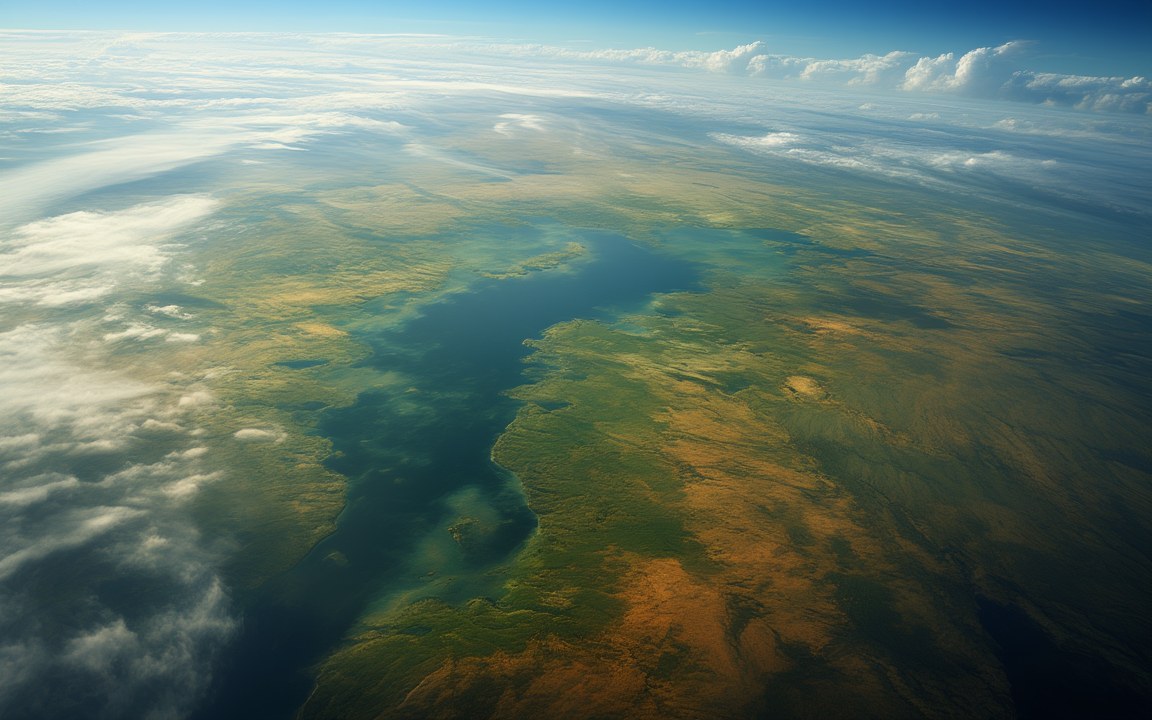
From about 14 500 to 5 000 years ago most of the Sahara was not desert. Grass, shrubs and scattered trees covered it, lakes filled its basins, and people caught Nile perch beside a lake on the edge of what is now the bare Ténéré. Scientists call this time the African Humid Period. It shows how a slow shift in Earth’s orbit can remake a climate, and it happened recently enough to have left cemeteries, a boat and thousands of pictures on rock.
Savanna, not jungle
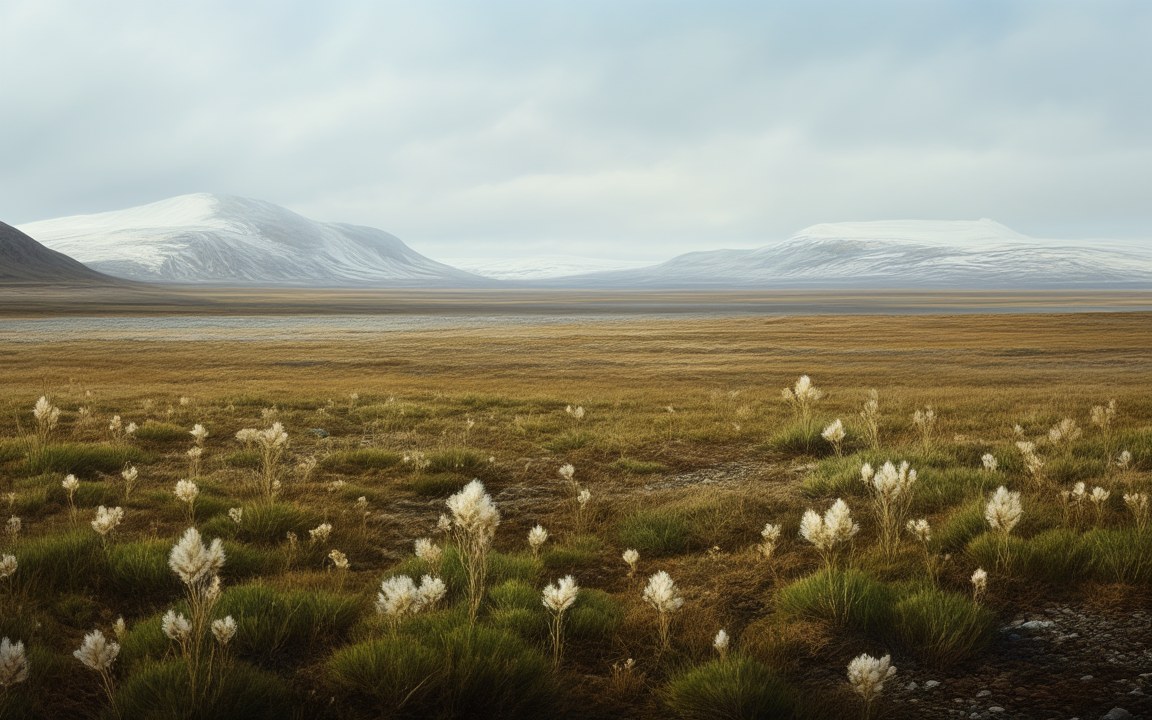
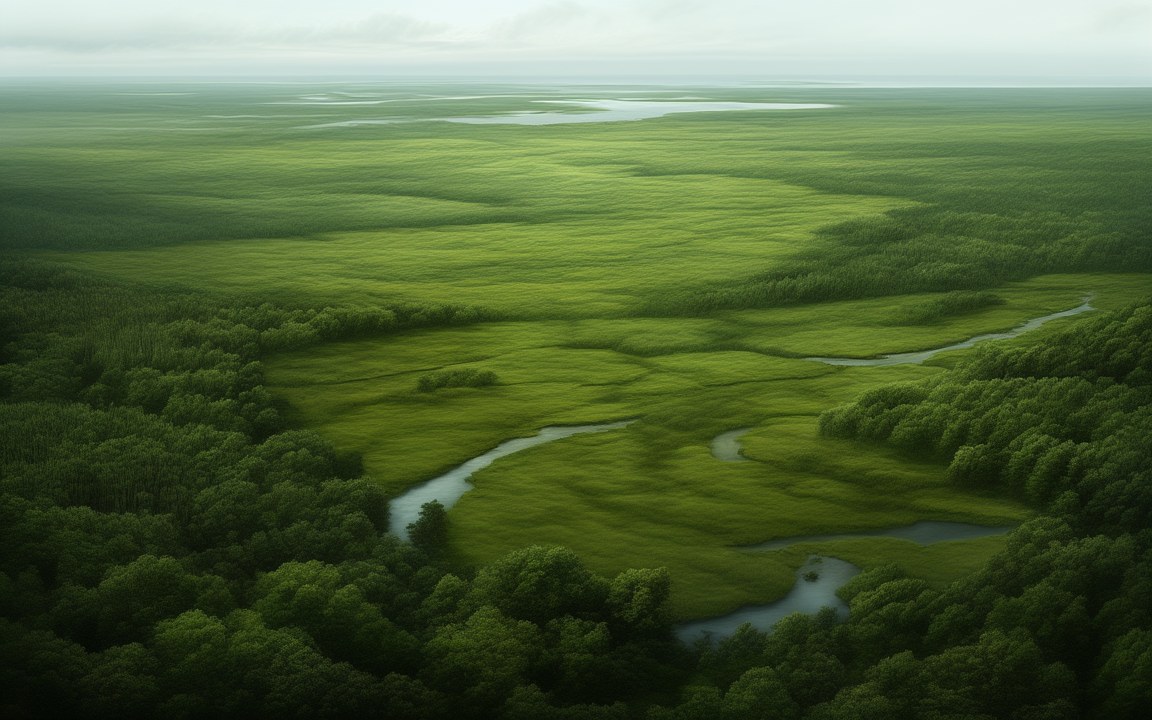
The green was thin by tropical standards. Rainfall over the Sahara reached roughly 300 to 400 mm a year and probably no more than about 500 mm, the amounts of a dry savanna, and parts of the eastern Sahara stayed below 100 mm. Plants that now grow 400 to 600 km farther south spread north, with vegetation reaching 27 to 30° N in West Africa. At Gobero in Niger, pollen shows open savanna of grasses and sedges with some fig and tamarisk. Dust fell too: about 6 000 years ago the Sahara gave off about one fifth of what it does today, so the air was probably clearer.
A lake to rival the Caspian
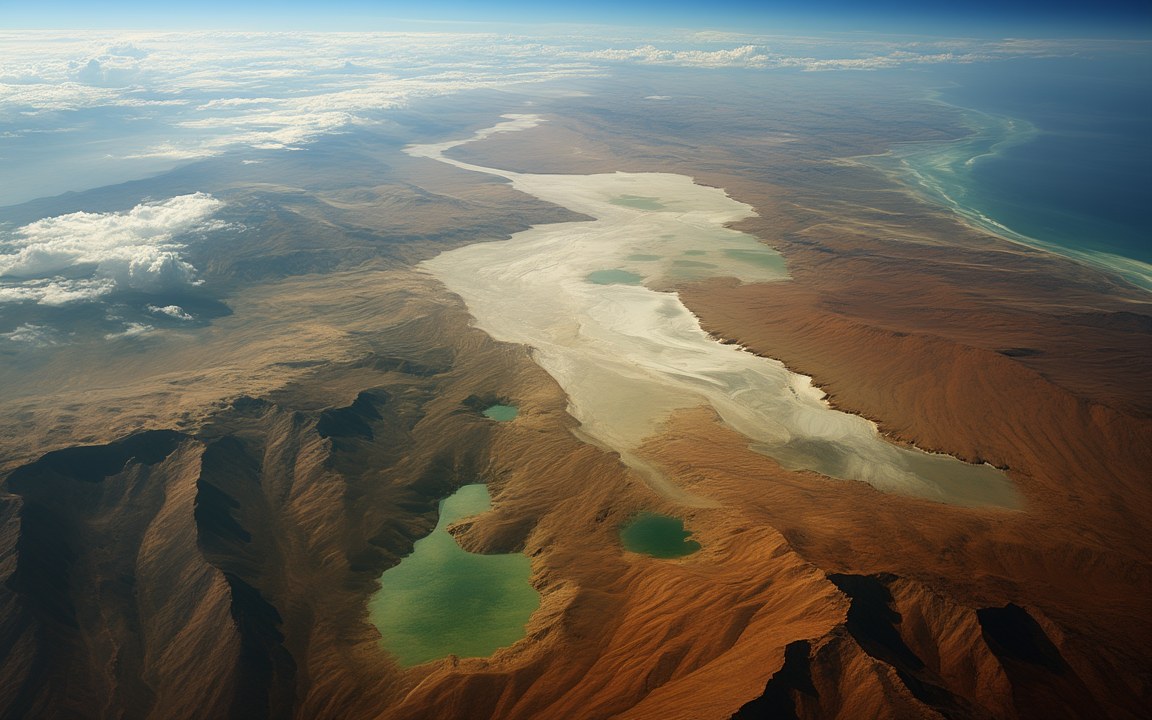
Today’s Lake Chad, at about 2 000 km², is what remains of the largest lake in Africa at the time. Lake Mega-Chad reached its high level by about 11 500 years ago and held it until about 5 000 years ago. It covered about 361 000 km², comparable to the Caspian Sea, and was up to 160 m deep. It overflowed through the Mayo Kebbi into the Benue and Niger rivers, and its 329 m shoreline can still be traced across the basin.
Fishers, then herders
In 1987 a Fulani herdsman digging a well in Yobe State, Nigeria, struck the Dufuna canoe at a depth of 4.5 m. Dated to 8 500 to 8 000 years ago, it is the oldest known boat in Africa: 8.4 m long, about 50 cm wide, with its ends worked to points.
Gobero, on the Ténéré’s western edge, holds about 200 burials and the earliest known cemetery in the Sahara. From about 7700 to 6200 BCE largely settled people lived beside a shallow lake, using bone harpoons and hooks to catch fish, among them Nile perch and large catfish. Drought then emptied the place for up to a thousand years. Different people arrived by about 5200 BCE, living on clams, fish and savanna animals, with some cattle. One of their graves, from about 3300 BCE, holds a woman and two children with their arms intertwined.
Domestic animals reached the Sahara about 7 000 years ago. Genomes from two naturally mummified people at Takarkori in Libya, more than 7 000 years old, show a long-isolated North African lineage, which suggests herding spread through contact rather than mass migration. Giraffes and cattle are the animals most often engraved in the Wadi al-Ajal in Libya, and at the Cave of Swimmers in Egypt, found by Almásy in 1933, bent figures have been read as swimmers, though Zboray thinks them symbolic. Almásy also coined the idea of a Green Sahara.
Why the rain came
Precession, a slow wobble of Earth’s axis, changes the season at which the planet passes closest to the Sun. Between 11 000 and 10 000 years ago that fell near the summer solstice, raising solar radiation by about 8 per cent and strengthening the African monsoon. Orbit alone does not produce enough rain in climate models, so plants, lakes and lower dust probably amplified it. A 2021 study from Lake Tislit in Morocco argues that winter rain from the Mediterranean and North Atlantic mattered as much as the monsoon. A 2023 model found such green phases about every 21 000 years over the past 800 000 years, held back during ice ages.
An uneven ending
North of the monsoon belt the drying was over within about 500 years, between 6 000 and 5 000 years ago. Lake Mega-Chad fell sharply soon after 5 000 years ago, dropping more than 100 m in its northern basin within a few centuries, yet pollen from Lake Yoa in Chad suggests full desert arrived there only about 2 700 years ago. Droughts had come before: a 2026 study of Lake Yoa’s layered mud finds at least three, around 9 300, 8 200 and 6 300 years ago, the middle one lasting 77 years. As the water failed, people moved towards surer supplies such as the Nile Valley.