Named1972, by Cloudafter Hades, the Greek god of the underworld[1]
Oldest piece of Eartha zircon crystal 4 404 million years oldfrom the Jack Hills, Western Australia[2]
Liquid waterpossibly from 4.4 to 4.0 billion years agofrom oxygen in zircon crystals[1]
Moon formedprobably 4.43 to 4.53 billion years agoafter a giant impact on the young Earth[6]
Moon's distanceabout 16 to 22 Earth radiiabout 4.35 billion years ago; about 60 today[6]
Oldest rocksabout 4.02 to 4.03 billion yearsthe Acasta Gneiss, Canada; older claims are disputed[4]
Airprobably mostly carbon dioxidewith hydrogen and water vapour[1]
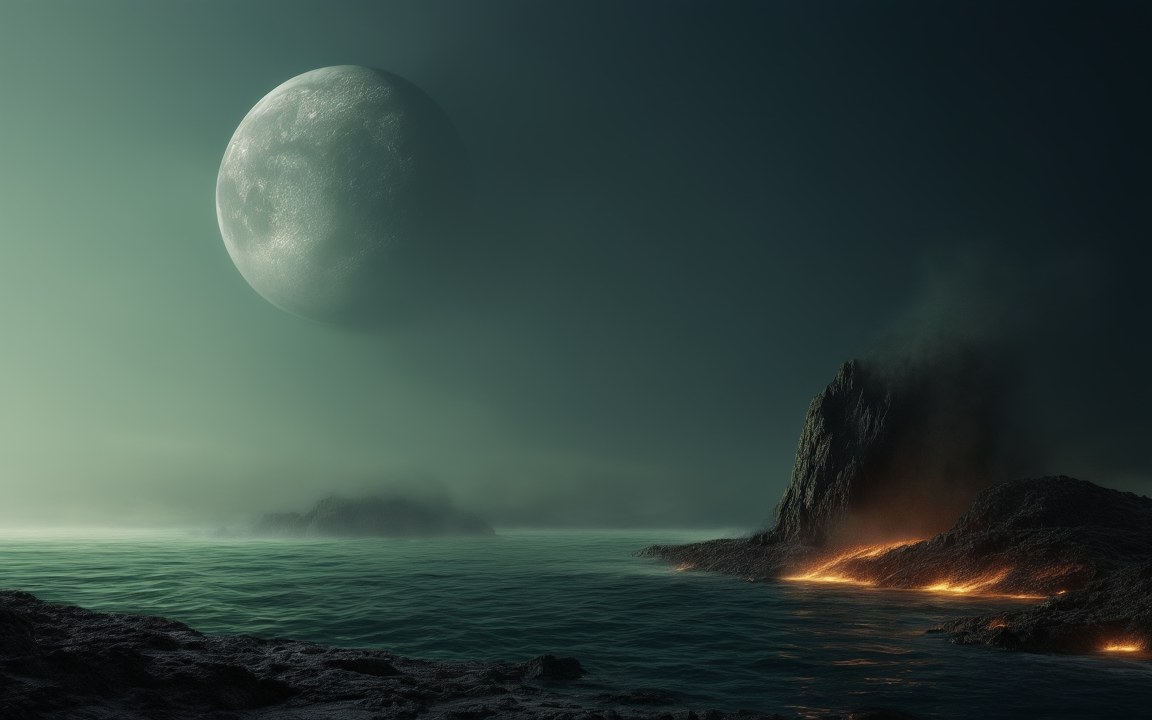
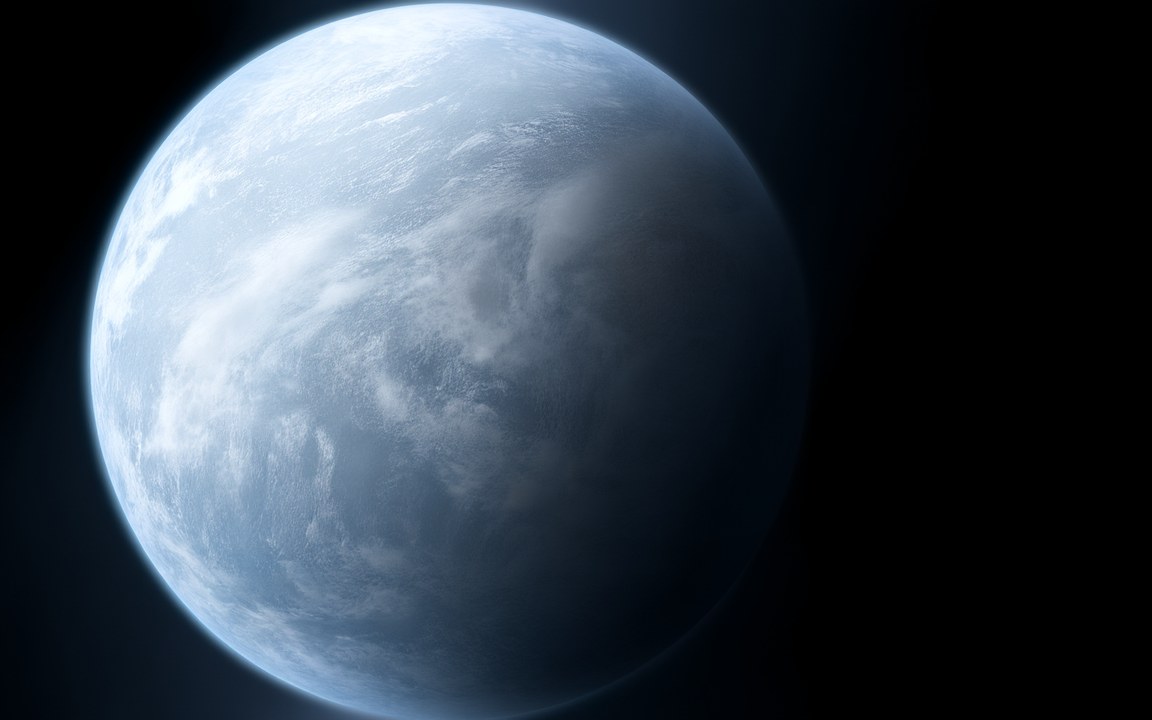
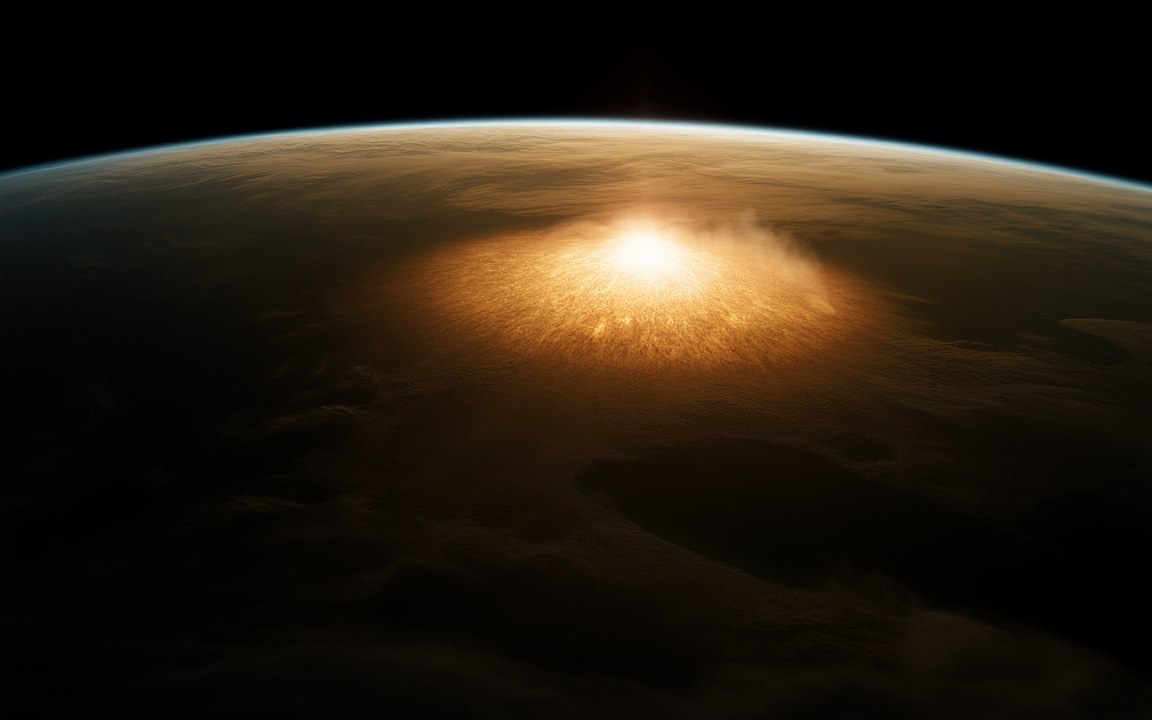
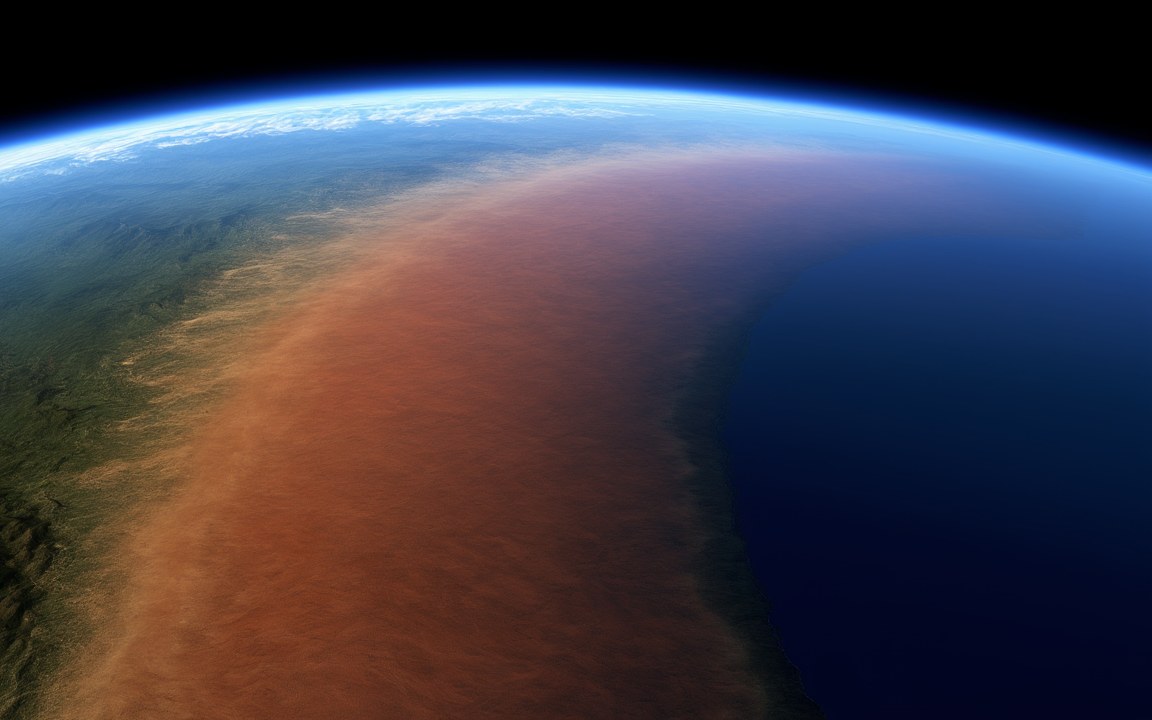
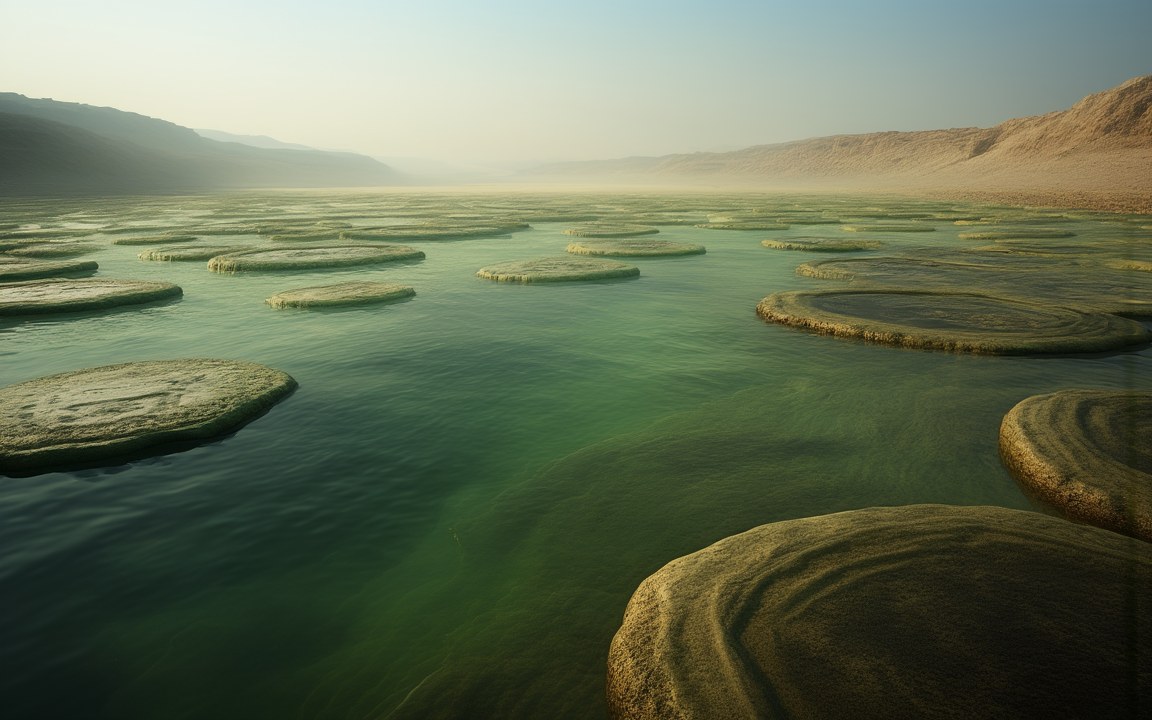
About the pictures. Two views show the young Earth about 4.4 billion years ago, mostly ocean with small volcanic islands, and the Moon far closer than today. Zircon crystals suggest there was liquid water by then, but the amount of land, the colours of sky and sea and the Moon's exact distance are not known. A 2024 model makes the Moon about three times as wide in the sky; the shore view draws it much larger than that. Two earlier scenes show the giant impact that made the Moon, when a body about the size of Mars, sometimes called Theia, struck the young Earth, and the newborn Moon beside a cracked, half-molten Earth. The Moon probably formed between 4.53 and 4.43 billion years ago. Simulations guide the collision, but its look is imagined.
The Hadean is the first chapter of Earth’s history, from the formation of the planet, dated by the oldest solid material in the Solar System to about 4 567 million years ago, to about 4 031 million years ago. Almost nothing from it survives: almost no rock on the surface, only tiny crystals. It was named in 1972 after Hades, the Greek god of the underworld, for the molten, bombarded hell it was thought to be. The evidence gathered since suggests that for most of it, the Earth was already a world of water.
A violent start
Early in its history, the young Earth was struck by a body about the size of Mars, sometimes called Theia. The debris thrown out by that collision gathered into the Moon. The impact melted much of the planet into an ocean of magma, but that did not last long in geological terms: models suggest it solidified within about 5 million years. The gases left behind probably formed a heavy atmosphere of carbon dioxide with hydrogen and water vapour, with a surface temperature of about 230 °C and a pressure more than 27 times today’s.
Messages in crystals
The oldest known piece of Earth is a grain of zircon, a tough mineral that survives when the rock around it is destroyed, found in the Jack Hills of Western Australia and dated to 4 404 million years. The oxygen inside such crystals carries a memory of the conditions in which they formed, and it suggests that liquid water was already present on Earth between about 4.4 and 4.0 billion years ago. A study published in 2024 went further: very light oxygen in Jack Hills zircons pointed to fresh rain water cycling through the crust by about 4.0 billion years ago, which suggests that some land stood above the sea. How much is unknown: one model has continental crust covering only about a quarter of today’s area by the end of the Hadean, while another has it reaching today’s volume by then.
A Moon three times as wide
The young Moon orbited much closer to Earth and has been drifting away ever since. A 2024 study used the age of certain lunar rocks, which record a time when the Moon’s interior was remelted by tides, to place it at about 16 to 22 Earth radii from the planet around 4.35 billion years ago, roughly 100 000 to 140 000 km. Today it is about 60 Earth radii away. Seen from a Hadean shore, the Moon would have looked about three times as wide as it does now, and the same study concluded that the Moon itself probably formed between about 4.43 and 4.53 billion years ago.
The oldest rocks
Hardly any rock survives from the Hadean itself. The Acasta Gneiss in northwestern Canada, about 4.02 to 4.03 billion years old, marks the end of the eon in the international time scale. In 2025 a team argued that intrusions in the Nuvvuagittuq belt of Québec are at least 4.16 billion years old, which if correct would make them the oldest rocks known. The age of that belt has been argued over since 2008, though some earlier doubters now accept that it contains Hadean rock.
Life in the Hadean?
It is possible that life began during the Hadean. Carbon trapped inside a 4.1-billion-year-old zircon has been interpreted as possibly biological, and a 2024 study estimated that the last common ancestor of all living things lived between about 4.09 and 4.33 billion years ago. Whether the young Earth was battered by a “late heavy bombardment” of impacts between about 4.1 and 3.8 billion years ago, as once thought, is now debated.
Where it sits in deep time
Hadean eon: About 4 567 to 4 031 million years ago, in the Hadean.
Each step to the right is ten times closer to today, so the last few million years get as much room as the first billion.
00:00:00
If Earth's history were one day
Squeeze all of Earth's history, about 4.6 billion years, into 24 hours, starting at midnight. Hadean eon runs from 00:00:00 to 02:49:05, ending 21 h 10 min before midnight.
On this clock one second is about 52 862 years. All of written history fits into the last tenth of a second.
A Moon much closer
How far away the Moon was about 4.35 billion years ago, according to a 2024 model, compared with today.
Moon's distance today384 400 km
Then, at most140 000 km
Then, at least102 000 km
At that distance the Moon would have looked about 2.7 to 3.8 times as wide in the sky as it does today.
Reconstructions
A huge, pale grey, cratered Moon hanging low in a hazy green sky over a dark ocean, with glowing lava running into the sea from a black volcanic shore, an impression of the young Earth in the Hadean eon. AI-generated painting.A blue globe covered almost entirely by ocean and streaks of white cloud, half in shadow, with a grey, cratered Moon close beside it in black space, an impression of the young Earth and Moon about 4.4 billion years ago. AI-generated painting.A smaller, dull orange planet crashing into the edge of a huge, glowing red planet in black space, a white-hot flash and a vast spray of molten rock bursting from the point of impact, an impression of the giant impact that formed the Moon about 4.5 billion years ago. AI-generated painting.Two glowing worlds in dark space with a pale arc of haze curving behind them, a large dark planet covered in cracked crust with molten rock showing through and a smaller, half-molten Moon close beside it, an impression of the young Earth and the newborn Moon about 4.5 billion years ago. AI-generated painting.
Questions people ask
How long ago was the Hadean eon?
From about 4 567 to 4 031 million years ago, according to the international geological time scale. It is the first of Earth's four eons.
Did Earth have oceans in the Hadean?
Probably, at least for most of it. The chemistry of tiny zircon crystals suggests there was liquid water between about 4.4 and 4.0 billion years ago, and a 2024 study found signs of fresh rain water cycling through the crust by about 4.0 billion years ago.
How close was the Moon 4.4 billion years ago?
Much closer than today. A 2024 study placed it at about 16 to 22 times Earth's radius, roughly 100 000 to 140 000 km, about 4.35 billion years ago. Today it is about 60 Earth radii away, so it would have looked about three times as wide in the sky.
What is the oldest thing on Earth?
A zircon crystal from the Jack Hills in Western Australia, 4 404 million years old, give or take 8 million. The oldest rocks are about 4.02 to 4.03 billion years old in the Acasta Gneiss of Canada; a 2025 study argued that rocks in Québec are at least 4.16 billion years old, but that is still disputed.
Why is it called the Hadean?
The geologist Cloud named it in 1972 after Hades, for the hellish conditions once imagined for the young Earth. The evidence from zircon crystals now suggests it was cooler and wetter than the name implies.