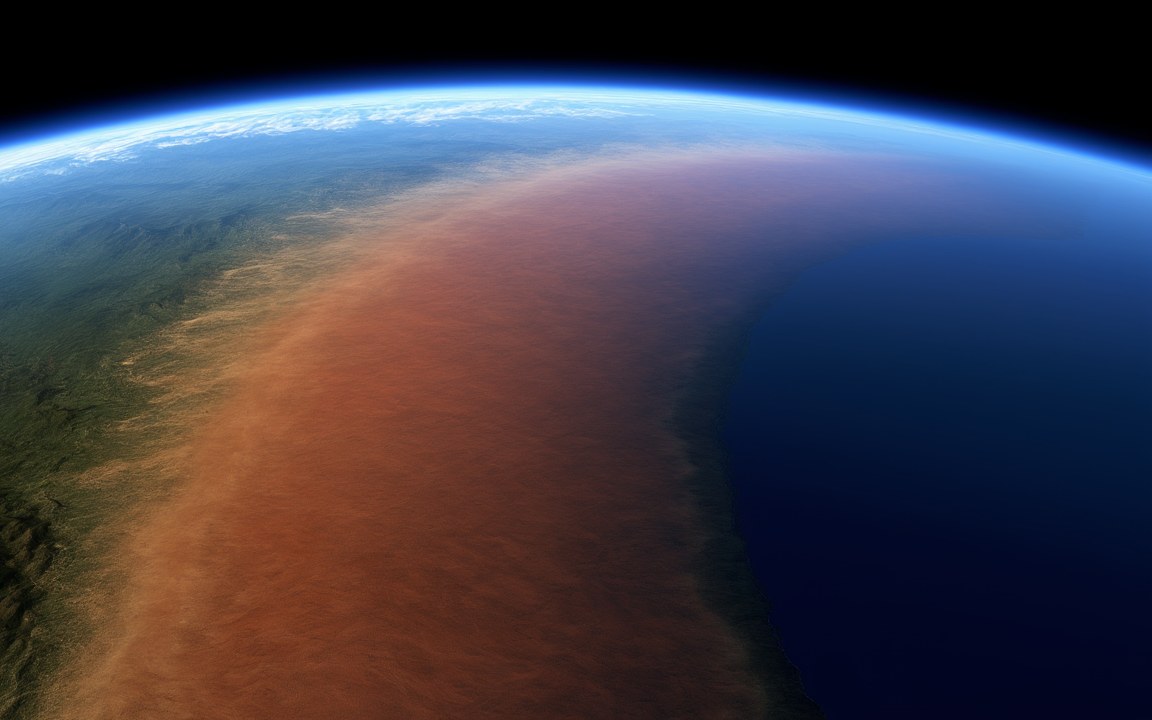
The Carboniferous ran from 358.86 to 298.9 million years ago, while the continents were closing to form Pangaea. Its name is Latin for coal-bearing, and the majority of Earth’s coal dates from its later part and the early Permian. Swamp forests filled the wet lowlands near the equator while ice sheets spread over Gondwana in the south. American geologists split the period in two: the mostly limestone Mississippian, when crinoids thronged the seas, and the coal-bearing Pennsylvanian, from 323.4 million years ago.
Trees that were not trees
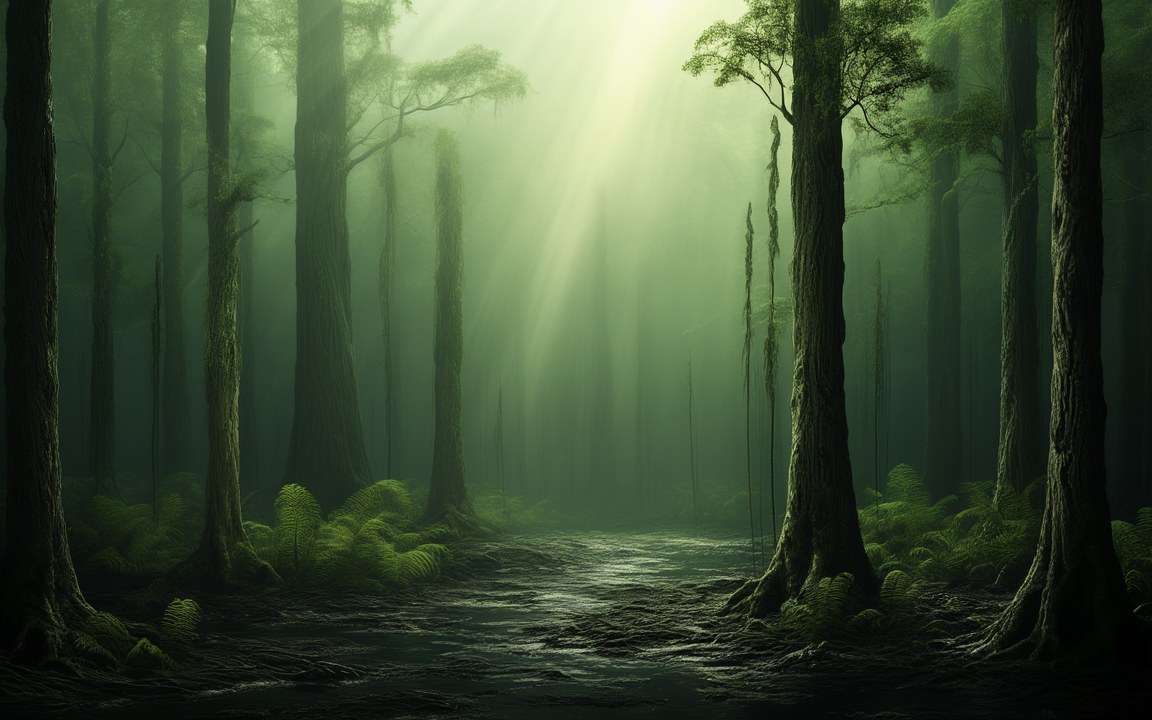
The tallest plants were scale trees such as Lepidodendron, cousins of today’s tiny club mosses. Height estimates run from about 30 m to over 50 m. For most of its life a scale tree was a single unbranched pole, its bark patterned with the diamond-shaped leaf bases behind its name. Only late in life did the top fork repeatedly into a crown, tipped with cones that shed spores rather than seeds. The trunk held little wood.
Around them stood Calamites, giant horsetails up to 20 m tall, with tree ferns and seed ferns. Forests may already have had layers: Sanfordiacaulis, about 350 million years old and described in 2024 from New Brunswick, grew a few metres tall under a crown 5 to 6 m wide.
Coal made by ice
Coal begins as peat: plant debris piling up in waterlogged, oxygen-poor swamps, then buried and compressed. Why so much formed then is still debated. One idea is that trees evolved lignin, the tough material in wood, before fungi could break it down, and a 2012 genetic study placed the origin of that ability around the end of the Carboniferous. In 2016 Nelsen and colleagues rejected this: much Carboniferous coal comes from scale-tree bark with little lignin, and it built up just as fast when lignin-rich plants took over. They point instead to geography: tropics that were always wet, and wide sinking basins, as Pangaea assembled. The rising Central Pangean Mountains drew in moist air from the Paleo-Tethys.
The ice age, from about 360 to 255 million years ago, helped with the burying. Ice spread from up to 30 centres in Gondwana, advancing and retreating on a cycle of about 100 000 years. As it grew, sea level fell and swamps spread across the exposed shelves. As it melted, the sea came back and buried them in sediment. Each round left a cyclothem, a package of land and marine rocks.
Oxygen and the giants
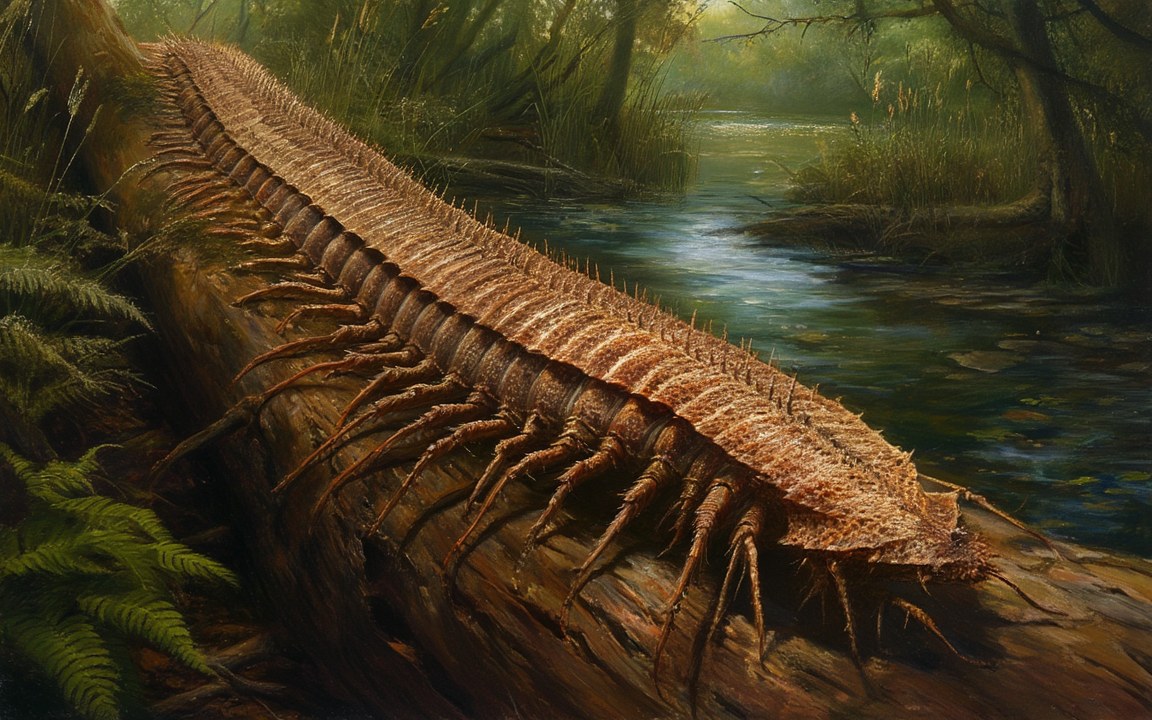
All models show oxygen rising, from 15 to 20 per cent to highs of 25 to 30 per cent. This long served to explain the griffinfly Meganeura and the 2.6 m Arthropleura. The explanation is weakening. In 2026 Snelling and colleagues measured the finest air tubes in the flight muscle of 44 insect species. They fill about 1 per cent or less in most species and barely increase with body size, so oxygen supply seems not to cap growth.
Eggs away from water
Amniotes, the group that later gave rise to reptiles, birds and mammals, enclose the embryo so that it does not dry out, which frees them from breeding in water. The classic early example is Hylonomus, 20 to 25 cm long and about 318 million years old, found in the hollow stumps of scale trees at Joggins in Nova Scotia. In 2025 Long and colleagues described clawed footprints from Victoria, Australia, about 350 to 356 million years old, which push the first amniotes back by at least 35 to 40 million years. Footprints are indirect evidence, so the maker is inferred.
Not quite a collapse
In the earliest Kasimovian stage, about 305 million years ago, the coal forests of Europe and North America changed. A glaciation of under a million years took carbon dioxide as low as 180 ppm, and the climate turned cooler and drier. Within one glacial cycle, peat swamps ruled by scale trees passed to tree ferns and seed ferns, and diversity fell. This is the Carboniferous rainforest collapse, a name DiMichele and colleagues consider exaggerated, because one kind of rainforest replaced another. Lepidodendron survived in Euramerica until the end of the period, and in what is now China until about 252 million years ago. Arthropleura and large griffinflies outlived the change.
Sahney and colleagues argued that the forest broke into islands, each evolving its own fauna. A 2018 reanalysis by Dunne and colleagues, correcting for uneven sampling, found more mixing instead. A permanent shift to seasonally dry woodland came at the boundary with the Permian.